Showing posts with label ireland. Show all posts

26 June 2025

The black cat keeps telling me that love is on it's way

Thursday music corner: Irish rock group Hothouse Flowers formed in 1985 and attained worldwide fame with the second release of their breakthrough single Don't Go in 1988. It had been released successfully in Ireland the previous year, reaching number 2 in the national charts, but the 1988 re-release with its globe-trotting video became a major hit. The single reached number 6 in both Sweden and New Zealand, number 11 in the UK, and number 7 in the US Alternative Airplay chart. 

The band has released seven studio albums, the first five of which on London Records. The first three, People (1988), Home (1990) and Songs from the Rain (1993), all topped the Irish charts and reached the top 10 in the UK. Home also was a number one album in Australia.

Before forming Hothouse Flowers lead singer Liam Ó Maonlaí was in a trio called The Complex; when he departed to form his new group the remaining members became half of My Bloody Valentine. Ó Maonlaí also collaborated with fellow Irishman Andy White and New Zealand's Tim Finn in the mid-1990s project, ALT.

This performance of Hothouse Flowers' best-known hit is from October 2021 on the RTE1 Late Late Show, accompanied by the Irish Chamber Orchestra.

Hothouse Flowers - Don't Go (live with the Irish Chamber Orchestra, 2021)


See also:
Music: Hothouse Flowers - Feet On The Ground (1988, IRE #1 single)
Music: ALT - We're All Men (1995)
Music: My Bloody Valentine - You Made Me Realise (1988)

06 March 2024

Crusader Kings 2: Some medieval doggerel

Some medieval doggerel, or,
The Ballad of the Concubine Addiena, to whit:
G*d d*mn the Patriarchy
A tale from 9th-century Ireland, from Crusader Kings 2

Tis a tale of the wanton in the far isle of Eire
A young girl had been raised who had the longest black hair
In the palace she lived, with the Queen and the King
But the name of her sire, no courtier could sing

A bastard was she, yet cared for and fed
With the grace of the Queen, though not in her bed
The Queen lent a wet-nurse and paid for another
(But surely kept quiet about being the mother)

The girl's name was Addiena, uncommon to most
And as she grew she was more often to boast
Of her silken black hair that she wove forth in tresses
And the beauty of the linens in her fine English dresses

Now later, much later, when quite fully grown
Addiena and the Queen disagreed 'bout the throne
For the Queen's husband had become quite neglected
And Addiena, the rogue, had become quite disaffected

So Add, in her wisdom, seduced the poor King
(King Coscrach, the dotard, suspected not a thing)
And bore him a child, with no expressed shame
Arnemetia she called it, her own mother's name

A fitting tribute, she reckoned, to her bastard existence
A new life on Earth and a social resistance
The King, he ashamed, did wed off the maid
And the Queen, she angered, his doom she emprayed

So be this a lesson for every Queen to know best
If ye bring forth a babe from beyond royal nest
Set a household ban on all Concubina
And don't let your husband meet the fair Addiena

See also:
Games: Crusader Kings 2 - Stayin' alive, 25 October 2018 

27 July 2023

And they say, "See how the glass is raised?"

Thursday music corner: Irish singer-songwriter Sinead O'Connor, who died yesterday aged 56, was an outsider in the music scene who embraced contrarian activism and rejected the conformity of the pop stardom that was her due after the world-straddling success of her cover of Prince's Nothing Compares 2 U in 1990. A troubled upbringing and lifelong struggles with mental health and substances affected her career, but her innate talent, fearless inventiveness and broad musical interests kept her work both relevant and challenging throughout her career. She released 10 studio albums over her career. In 2021 she published a successful memoir, Rememberings, and the following year Kathryn Ferguson's documentary Nothing Compares captured O'Connor's mercurial genius and her ambivalence to the trappings of fame. Film reviewer Peter Bradshaw wrote:

Above everything, O’Connor blasphemed against the ethos of success, a transgression which appalled the music world in 1992 as much as I suspect it would astonish the players of today. O’Connor had it all, she had stadium-level success within reach and threw it away by speaking out in ways that U2, say, would never dare. 

Mandinka was the second single released from O'Connor's debut album, The Lion & the Cobra, in 1987. The song reached number 6 in Ireland, and hit the top 20 in the UK and New Zealand. At her last New Zealand performance in 2015, O'Connor couldn't finish performing her biggest hit because she was distracted by a duck quacking and dissolved into fits of laughter.

Sinead O'Connor - Mandinka (1987)


See also:
Music: Sinead O'Connor - Fire On Babylon (1994)
Music: Peter Gabriel & Sinead O'Connor - Blood Of Eden (1992) 
Music: Sinead O'Connor - Daddy I'm Fine (2000) 

31 January 2023

The end of the Irish Civil War

There was no agreed or negotiated peace to end the civil war; no church bells pealed to celebrate its conclusion and there were no grand gestures of reconciliation. De Valera proclaimed to the 'Soldiers of the Republic, Legion of the Rearguard: The Republic can no longer be defended successfully by your arms. Further sacrifice of life would now be in vain ... military victory must be allowed to rest for the moment with those who have destroyed the Republic. Other means must be found to safeguard the nation's right.' That exhausted legion, though still defiant, just 'hid their arms and went home' [...]

How many died overall during the war? There has been no definitive answer. Estimates have varied too widely, from 1200 to 4000. It is likely more National Army soldiers were killed than republicans, but there is no conclusive figure. Some have settled on the assertion 'less than 1500' and sought to compare that to Finland's civil war dead of perhaps 36,000, of whom 8700 were killed in battle and the remainder of whom were executed or died in prison camps. County studies have suggested 220 civil war fatalities in Cork, 170 in Kerry, 130 in Tipperary and 258 in Dublin, the most violent counties. An overall estimate of 730 National Army and 350 IRA dead would seem reasonable; that does not tally exactly with figures given by the government in 1924 (800 National Army), or by the IRA that decade (400), but is not far off. Up to 200 civilians were also killed. The financial cost has been estimated at £47 million (about £2.7 billion today); such was the scale of the infrastructural damage that £10 million of £26.5 million spent on public services in 1922-3 was devoted to security and reconstruction.

- Diarmaid Ferriter, Between Two Hells: The Irish Civil War, London, 2021, p.119-121

See also:
History: Brugha's bulwark, 18 May 2018
Comedy: The Irish police force, 30 November 2014 
Blog: Ireland, 5 June 2010

24 November 2022

A lawless league of lonesome, lonesome beauty

Thursday music corner: Irish singer-songwriter Lisa O'Neill (b.1982) grew up in County Cavan near the Northern Ireland border, and first came to prominence supporting David Gray on his 2011 North American tour. She has released four albums since 2009, with the most recent being 2018's Heard a Long Gone Song. Her new song, the haunting, wistful Old Note, was released on YouTube on 15 November 2022, presaging the release of her fifth album, All Of This Is Chance, in February 2023.

Lisa O'Neill - Old Note (2022)

27 January 2022

Bury me at sea where no murdered ghost can haunt me

Thursday music corner: Celtic punk band The Pogues formed in London in 1982 and were fronted by the hard-living Shane MacGowan until 1991. The band’s first incarnation wound up in 1996, but they reformed five years later with MacGowan for touring purposes, which lasted until 2014.

If I Should Fall From Grace With God was the title track and opening number of the Pogues’ third album, which also featured the world-renowned and much-loved Christmas song Fairytale of New York, recorded with Kirsty MacColl. If I Should Fall From Grace With God (the song) was written by MacGowan and released as the follow-up single to Fairytale of New York.

The Pogues – If I Should Fall From Grace With God (1988)

18 May 2018

Brugha's bulwark

On the Irish side Cathal Brugha passed into folklore as the contemporary embodiment of the legendary hero Cuchulain who tied himself to a tree stump during battle so that he would not fall from his wounds. Cuchulain's enemies only approached him when a raven perched on his shoulder, indicating that he was dead. Brugha, a Vice-Commandant whom a former colleague later described as being as brave and as stupid as a bull, received twenty-five wounds. He was defending a barricade erected to guard the Nurses' Home where the Volunteers' leader Eamonn Kent along with William Cosgrave, who later became an Irish Prime Minister, and a small group of rebels were located. He gave his watch to a subordinate to be given to his wife - if the Volunteer ever got out alive.

Then, his own life apparently forfeit, he turned to defend the barricade alone for as long as he could. Inside the Nurses' Home the Volunteers were dispirited and weary. It appeared that the end had come and while waiting for a final attack that they did not expect to survive, they joined Kent in saying a decade of the Rosary. Then from outside the Home they heard Brugha singing God Save Ireland. He had dragged himself into a position with his back to a wall where he could command the barricade and was challenging the British to come over it. Reinvigorated, the rebels shook off their depression, remanned the barricade and kept the British at bay. Incredibly, Brugha survived the Rising - to die six years later in a civil war at the hands of forces commanded by a government which included William Cosgrave.

- Tim Pat Coogan, 1916: The Easter Rising, London, 2001, p.117-8.

See also:
ComedyThe Irish police force, 30 November 2014
ComedyEvery Irish wedding ever, 26 March 2014
Blog: Ireland, 5 June 2010

01 May 2015

Ed Byrne

Ed Byrne - Roaring Forties
Hannah Playhouse
Wellington
30 April 2015

Last night at the Hannah Playhouse (formerly Downstage), Irish comedian Ed Byrne harked back to his first gigs in Wellington way back in 1997... at Downstage. No-one was complaining about the proficiency and charm Byrne brings to his well-honed standup routine, even if he joked that he had reached his peak back in the late 20th century. (His famous Alanis Morissette-baiting routine on irony was an early highlight). Now 43, Byrne's material focuses on disgraceful middle-agedness, but without the dreary predictability that might suggest. He still takes a wry glee in juvenile idiocy, such as the sure-fire lady-repellent that is air guitar solos, and offers a deftly-told account of being forced to attend a four hour driving awareness course with a didactic instructor whose po-faced delivery demanded the silliest possible answers, despite the growing annoyance of his fellow classmates. Now with two children, Byrne's recounting of the effects of child-rearing on friendships and social lives also appealed: 'I have all these new friends just because their children know my children, and I don't have time to see the friends I actually like!' Two highlights of the set were clever pieces on his recent hernia (caused by lifting a semi-full compost bin) and the resulting surgery, and a marvelous retelling of a visit he and his wife took to an NHS doctor to discuss a vasectomy, which was full of bleak self-deprecating humour.

Throughout the gig an added dynamic was the presence of two young local women taking turns to perch at the edge of the stage and translate Byrne's material into sign language. They did a sterling job, but at one point as the material got rather 'boisterous' in discussing matters sexual and you had to feel sorry for them. (But at least we now know the sign language for 'erection'). Ever the gentleman, Byrne did pause to muse whether making them translate his comedy was in effect a form of sexual harassment. That, and the banter with a lady audience member who explained that her own hernia was brought on by being 'fat and pregnant', made for a highly appealing night of professional comedy in Wellington. Now all the capital would like, if you don't mind, is for Byrne to convince his mate Dara O'Briain to tour New Zealand too!

See also:
ComedyEddie Izzard, 15 February 2015
ComedyBill Bailey, 3 November 2014
ComedyJosie Long, 6 May 2013
ComedyDavid O'Doherty, 5 May 2012
Comedy: Ed Byrne / Steve Coogan, 17 May 2009

30 November 2014

The Irish police force

It's only when you've been and experienced American cops that you're so glad to be either Irish or British, where our Old Bill don't get a gun routinely. Does everybody know about the Irish police force, An Garda Síochána? They're a quality police force, and they're the friend of the comedian. When I was sixteen, I got arrested for teenage drinking in a park when I asked the cop, 'Have you got a gun?' And, I quote, he said: 'Why would I need a gun when I can take off me shoe and beat you wit' it?'

Less guns, more shoes! That's why Ireland has no history of tragic school shoeings.

- Andrew Maxwell, The News Quiz, BBC Radio 4, 28 November 2014

26 March 2014

Every Irish wedding ever

From RTE2's sketch show Republic of Telly, 2013:

Priest: 'We don't see you from one Sunday to the next, but as soon as there's a wedding everyone's religious!'

Waiter: 'May I take your drinks order?'
Yer man: 'Yeah, gimme two triple vodkas with a little bit of Coke'
Waiter: 'You have to pay for it'
Yer man: 'Wine. Wine's fine'

Dad: 'For the loife of me I don't see where 70 Euros went there on that meal'


[NSFW-L]

See also:
Comedy: Republic of Telly - Limerick's biggest sins, 2 February 2014
Comedy: Fred MacAulay - The Troubles, 13 January 2013
Comedy: David O'Doherty, 5 May 2012

02 February 2014

Limerick's biggest sins

Mairéad Farrell: 'What did you steal?' Yer man: 'A Magnum, from a shop. I put it down my pants'. From RTE's Republic of Telly, 2010.

13 January 2013

The Troubles


I used to go over to Northern Ireland a lot when I was doing standup in the '90s and my wife would say, 'Fred, when you're over in Northern Ireland do you mention the Troubles?' I said, 'What?' She said, 'Do you talk about the Troubles when you're on stage?' And I said, 'Listen, I think you'll find the people of Northern Ireland have got more to worry about than the lack of female orgasms in our house'.

- Fred MacAulay, The News Quiz, BBC Radio 4, 11 January 2013.

07 July 2012

The new kings of Ireland

Crusader Kings 2
A few weeks ago I mentioned my anticipation of the strategy game Crusader Kings 2, in which you take control of medieval European nobles and attempt to emblazon the name of your dynasty across the history pages. After I returned from my Europe trip (more about which soon) I quickly downloaded the full game from Steam and started experimenting. As I expected, it was intriguing and addictive. Beginning to play CK2 felt rather like previous early experiences with Civilisation 3 and 4, in that there was clearly a great deal of gameplay and the ever-present danger of not being able to stop playing once you've started means you have to be fairly structured in when you play the game and for how long.

CK2 might disappoint fans of high-spec graphics and endless 3D animations, because in some respects it's actually a somewhat old-fashioned game. The action takes place on the European map, augmented with frequent pop-up messages to highlight new developments and decision points. When soldiers move around the map the animations are satisfactory but hardly cutting edge; two men with swords meet in battle and swing at each other like they're chopping firewood, and a number representing the size of the army counts down until one or the other army is defeated. While there are some modifiers for leadership and terrain, the larger army nearly always wins.

But the map itself is a beautiful thing. From Ireland to Iran and Nordkapp to the Nile, you can flit across the whole of Europe and its neighbouring lands. The various map filters allow plenty of tinkering that any map or history buff will relish. Aside from the simple terrain display, a multitude of political boundaries can be displayed, from small counties to massive kingdoms and empires. The designers have put a lot of effort into making the political maps look just as good as the best maps from historical atlases, and when your dynasty's colours and the serif capitals of your kingdom march across the map in a regal arc it's a proud sight indeed.


The gameplay is so varied and involved that it's hard not to become rather addicted to manipulating the lives of these rulers and subjects. Every individual has their own abilities and personality traits that affect their actions and their relationship with you, their ruler. Choosing your advisors wisely is a good start, but after that there are also important decisions to be made - who to marry, who to plot against, how to expand your demesne, what to build in your castles, towns and bishoprics. The importance of marriages to cement alliances and bring valuable character traits into a bloodline is paramount, not to mention the value of producing a large brood of offspring with which to secure the succession and marry off to create yet more alliances.


After a few false starts in various locations I made good progress playing the rulers of Munster in Ireland. The game starts in 1066, but by 1131 my Ua Briain clan had established the Kingdom of Ireland. Less than half a century later they had even added a second kingdom to their dominions, which is no mean feat. For the details of my Irish dynasty, read on - but be warned, things went downhill fairly quickly... 


Duke Murchad I 'the Careless' of Munster (1063-80)
The first Ua Briain ruler post-1066, Murchad established himself as the Duke of Munster, ruling over the lands in the south of Ireland. He died a natural death at the age of 53.


Duke Brian II 'the Wise' of Munster (1080-1108)
Brian II expanded the Ua Briain lands further northwards. His son and heir died imprisoned in a rival Irish lord's donjon aged only 22, so when Brian died a natural death at age 60 he was succeeded by his grandson.

Duke Brian III of Munster (1108-10)
The short and unhappy rule of Brian III was marked by war against his Irish rivals as he attempted to solidify his claim on Munster. He died in battle against the villainous Harald Crovan, aged only 22. Luckily for the dynasty, he had a son...

King Cormac I of Ireland (1131-41) and Duke of Munster (1110-41)*
Only a toddler of two years when he succeeded his slain father as the Duke of Munster, Cormac grew into a powerful ruler. By the time he was 23 he held sufficient lands to reunite the Kingdom of Ireland and proclaim himself king. (If only the pesky Scots hadn't poached the county of Ulster when things were looking hairy, Cormac would have ruled the entire island). Cormac was able to rule as king for ten years until an infected wound carried him off. Alas, his son and heir Brian was only a mere boy when he took the Irish throne...

*Henceforth only the main titles will be mentioned.

King Brian I of Ireland (1141-44)
Poor, unlucky Brian was cursed with an ambitious and cowardly regent, who conspired to rob him of his young life in numerous plots. When one after another of his devious schemes failed to kill young Brian, Duke Kalman II of Meath took matters into his own hands and slew the 12-year-old king with his own dagger.

King Dunlaig I 'the Ironside' of Ireland (1144-80) and Galicia (1176-80)
With the death of Brian, King Cormac I's second son Dunlaig took the throne and became one of the greatest rulers in medieval Irish history. In his long reign he built numerous fortifications and city improvements across Ireland, but he is probably best known for his successes on the battlefield and in diplomacy. With the sword he won an entire kingdom, that of Galicia in northwestern Spain, from the infidel occupiers after the Pope had declared a holy crusade to win back the lands for Christendom. And with diplomacy he arranged clever marriages that won him the Duchy of Northumberland out from under the nose of the King of England.

King Cormac II 'the Careless' of Ireland (1180-1201) and Galicia (1180-1201)
Alas, when a king as resourceful and talented as Dunlaig is followed by the merely average, his son Cormac, history can only take a turn for the worse. Unable to hold onto his father's gains in Iberia, Cormac lost every scrap of Galicia to vengeful caliphate soldiers by the end of the 12th century. He then lost his life in battle against the invading forces of the greedy Queen Emma I of England, falling on the fields of Ulster in 1201, aged 43.

King Dunlaig II of Ireland (1201-02)
While the death of his father Cormac II may have provided temporary relief from the rampaging forces of the English Queen, it also brought on a major rebellion by the new king Dunlaig's Irish vassals. The young king lasted a mere year on the Irish throne before being killed in battle against the rebellion leader Earl Fergus of Breifne, aged only 25.

Queen Xene I of Ireland (1202-22) and Countess of Tyrconnell (1202-48)
What - no sons? The Irish were therefore forced to pay homage to a woman as their monarch. The oddly-named Queen Xene may have sported an exotic moniker - her mother was a Princess from a mysterious royal court in the East - but she was able to hold the kingdom together for two decades despite coming to the throne at the tender age of six and spending all but one of her years as Queen engaged in a vicious struggle for her title with the avaricious Queen Emma of England. The Duchy of Northumberland was the first to go - unable to protect it from huge English armies, it was given up with little fuss. Then came full-blown war with England and years of invasions. After 20 long years of battle in which Ireland was ravaged by English troops and fortress after fortress fell to the invaders, Xene was finally deposed as Queen of the Irish in 1222 when the Scots joined the fray on the side of the English. Xene had been hoping that by dragging out the war as long as possible, either the pretender (her craven aunt Cacht) or the perfidious English Queen Emma (known as The Great in England, but as The Bitch in Ireland) would die. Xene risked her reputation and immortal soul by sending assassins after her aunt at least three times, to no avail. But now the Irish crown that was so cherished by her ancestors passed to her aunt Cacht, may God rot her soul. 


So for the last 26 years of her life, Xene was reduced to the role of a mere Countess in the far north of Ireland. At least she was no vassal of Queen Cacht, and at least she could console herself by styling herself in correspondence as Queen of Galicia, even though she had never set foot there and no scrap of Galician soil was ruled by Irishmen. And while her luck in battle was limited, Xene proved more fortunate in affairs of state, marrying one of her daughters to the young King of Lotharingia and another to a cadet prince of the Byzantine Empire. Xene died a natural death in 1248, aged 52.

Count Finnsnechtae I of Tyrconnell (1248-)
Can Count Finnsnechtae overcome the isolation of his meagre lands, the japery of those who mock him as a king who lacks not one but two kingdoms, and the potentially ruinous unpronounceability of his name to bring the Ua Briain clan back to greatness? Possibly, but now I have a hankering to play as a Swedish earl or perhaps the King of Sicily. Wish me luck and good counsel!

20 December 2011

The provenance of cider

The other weekend I was walking down Tory Street heading towards Courtenay Place when I saw the following billboard advertisement for Bulmer's Original Cider:


In case you can't see the tag-line at the bottom right, it reads: 'Unashamedly English Cider'.

'Aha,' I thought. 'Here's my chance to be a smart-arse'.  Because in my hazy memory I was fairly sure that Bulmer's was an Irish company, and that the New Zealand advertising agency APN was engaging in a woeful act of misrepresentation from which I could possibly wangle a mention on The News Quiz or in the Guardian.

Unfortunately it isn't quite as simple as that, and ultimately it just goes to show that you should always check your facts. Rather than misrepresenting the provenance of Bulmer's, the hokey graphic is actually correct - the name is English rather than Irish. There is an Irish angle to the story though, and it relates to the well-known cider brand Magner's, the rather pricey Irish cider that's served over ice on hot summer days in Britain.

H.P. Bulmer was founded by Percy Bulmer in Hereford in 1887. The company was successful and grew, and by the early part of the 20th century it was attempting to broaden its market by targeting the more genteel drinker:

Bulmers attempted to secure a high class market for their products. 'Champagne is ruinous in price; Bulmer's cider is the solution', the firm announced and in 1911 received the Royal Warrant as Purveyors of Cider to George V.
- Walter Minchington, 'Competition and cooperation: The British Cider Industry since 1880', in Hans Pohl (ed.), Competition and cooperation of enterprises on national and international markets, 1997, p.128. 

Ireland joins the story in 1935, when Tipperary man William Magner bought an orchard and established the Magner's cider factory in Clonmel. The established Bulmer's firm bought half the factory in 1937 and enlarged the operation, and after the war in 1946 it purchased the remaining half of Magner's share in the company, and dropped the Magner's name in favour of its own. By this stage Bulmer's had become a well-known brand, and one which marketed its products aggressively:

From the late 1940s sales were maintained by a growth of press advertising and, once commercial television had begun, by advertising there too. The Beverley sisters singing 'Bring out the Bulmers cider' was a landmark in this campaign. This advertising aimed successfully to replace the stereotype of the bucolic peasant as the typical cider-drinker. While some beer advertising tended to advertise beer as a man's drink, most cider advertising suggested that cider could be drunk in mixed company and an element of sex (or unisex) was added to cider sales. As marketing developed, a macho element was added in 1960 with a Bulmers brand, for example, being marketed under the name Strongbow.
- Minchington, p.131

The success in these marketing campaigns, and later ones too, can be seen in the rise and rise of cider consumption in the UK, particularly in the past 50 years. For 95 years from 1870 to 1965 the UK consumed a fairly consistent figure of about 20 million gallons of cider per year. But then the market took off: in the five years to 1970 the market grew by half (to 31.4 million gallons); in the next 15 years to 1985 consumption more than doubled (64.3m), and by 2005 it had more than doubled again (136.4m). By 2010 the UK was consuming ten times as much cider as it was in 1965*. Cider is big business.

Source: Walter Minchington, 'Competition and cooperation: The British Cider Industry since 1880', in Hans Pohl (ed.), Competition and cooperation of enterprises on national and international markets, 1997; and Cider UK

In 2003 Bulmer's was sold to a brewing chain, and by 2008 the venture had been bought by mega-brewers Heineken. The Irish company that produces Magner's is owned by the Irish drinks company C&C Group; the Magner's cider brand was introduced in 1999 because C&C lacked the rights to the Bulmers cider name outside the Republic of Ireland. However, the two ciders are the same product. Confusing!

My introduction to cider drinking came when I first moved to London in 1997. Traditionally regarded as an unfashionable student drink, cider was perfect for me because I don't drink beer, but when others were drinking pints it was easier to be drinking something served at the same volume for 'pacing' purposes. And as an added plus, the red English ciders tend to look like beer in a dark pub interior. When I returned to New Zealand in 1999 cider had yet to take off, but in recent years the market has expanded and you can even obtain Bulmer's and Magner's here now.

I guess I'll just have to refrain from criticising the Bulmer's billboard in Tory Street for historical inaccuracy. Perhaps I'll just have to change tack and lambaste it for misleading cultural stereotypes - after all, the use of the word 'frightfully' suggests it's a drink for poshos, which is traditionally not the case at all - apart from George V, that is.

Hot summer's day in London + a Magner's by the Thames = nice

05 June 2010

Ireland

SONY DSC On Wednesday last week I finished my contract at Essex, and the following day set off with my American pals Ruth & Phil to see a few sights on an Irish road trip.  It was to be only my second visit to Ireland, having enjoyed a fun week there in spring 1997 with Jennifer, Hayley and Laura.  I was keen to see how much I remembered from the dim and distant 20th century.

We met at Hatton Cross and picked up our little Nissan Micra from the rental place, which was staffed by a curious bunch who claimed we needed a form to take the car to ‘certain places in Ireland’ – places that they couldn’t name.  Oh, and they didn’t have a copy of the form or know what it was for.  After eventually tracking down an email copy from one of their other branches it appeared that the part of Ireland it applied to was the Republic of Ireland, i.e. everything except Northern Ireland!  And they still had no idea what it was actually for.  Into the glovebox with it, where it was promptly forgotten.

It’s been a few years since Phil drove on the left so I was able to get behind the wheel for the drive to our first stop, Oxford.  It was the first time I’d driven in the UK, and it was highly entertaining.  The first thing that strikes you is the massive overkill of road signs that festoon every possible intersection.  It’s as if the roads agency gets a bonus for every extra sign they erect, whether or not it’s necessary, and the combined effect is confusing for the uninitiated.  Still, we managed to find our way around the hated M25 circular and out to Oxford.  Having visited only a few weeks ago, I was well placed to show R&P around on a quick tour taking in the beautiful university buildings and a dinky market near the bus station. 

Then it was onwards to Stratford-upon-Avon, again a place I’d recently visited, for another whistle-stop tour, taking in Shakespeare’s house and burial site, the almshouses and the Harvard house. 

SONY DSCThen we realised we had better hurry if we were going to make our ferry to Dublin, which departed from the port of Holyhead in Anglesey at 9.30pm.  We had four and a half hours to get there, which was plenty of time, but we hadn’t reckoned on the traffic around Birmingham, which delayed us by about half an hour.  Despite a rather nerve-jangling dash across the north Wales motorway, during which Phil performed small wonders in his alternate guise as a Formula 1 driver, we arrived at Holyhead only to find that we were just slightly too late to get aboard our ferry.  It had yet to depart, but there was a 45 minute cut-off before departure and we had just missed it.  Damn.  Fortunately there was space aboard the next sailing, but it was at 2.30am (!)  So we went to a local beach (Trearddur Bay – see picture above) for a stroll at dusk and then whiled away a couple of hours at Holyhead’s McD’s (open til midnight – a positive boon for once). 

Once we were finally on board the ferry Phil located some comfy sofa benches for us, so we were able to grab a few hours of quality dozing time on the 3 1/4 hour trip from Holyhead to Dublin.

---

It was a bright and shining dawn when we arrived in the Irish capital, and once we negotiated the ludicrous network of inner city one-way streets to find our hotel, we then found an equally elusive car park and settled down to the very important business of catching up on a few hours of sleep.

By the time we emerged Dublin was still basking in the warm sunshine.  Our first stop was Trinity College Dublin, which was founded in the Elizabethan era, to see the marvellous Book of Kells, which one of the great wonders of medieval artwork.  Lovingly produced perhaps 1200 years ago, and therefore a near contemporary of the Alfred Jewel I saw a few weeks ago, the Book has survived numerous monastery fires and theft by Vikings in 1007, only to be recovered a few months later ‘under a sod’! 

Stitched Panorama

TCD is also home to the lovely Long Room library, which was one of the abiding memories of my last Dublin visit.  This vast chamber is a temple to knowledge, replete with antique books with two storeys of shelves and a fine arched ceiling.  The smell of old paper, binding and parchment is unforgettable. 
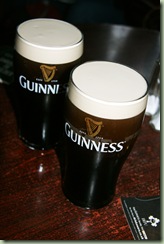
SONY DSC After a visit to two photography galleries in Temple Bar to admire the collections (photos from the Civil War and the Prix Pictet photojournalism finalists for 2009), we signed up for an entertaining evening with the Dublin Literary Pub Crawl.  Hosted by two genial and well-versed local actors, the tour illustrated the watering holes of various Irish men of letters, with a sizeable helping of humour and some rewarding performances of scenes from their best works.  Highly recommended if you happen to be in Dublin, even if (like me) you’re not particularly knowledgeable about the oeuvre.

We rounded off the evening with a visit to Temple Bar, which was heaving with music fans attending a free soul revue at a nifty outdoor venue in a small square.  We caught John, Shelley & The Creatures and The Burning Effigies, who were both excellent, and enjoyed some of the craic with the locals.

---

DSC05445Then it was time to bid farewell to Dublin and head northwards.  After extricating ourselves from the one-way system we headed north to visit one of the most impressive Stone Age sites in Europe – the famous passage tomb at Newgrange.  Since I’d last visited they’ve installed a swish visitors centre on the south side of the Boyne (the Battle was fought nearby) and now you’re whisked to Newgrange in a minibus rather than clogging up the tiny country lanes with cars.  Up close the tomb is awe-inspiring – the massive effort that went into its construction and the simple elegance of its decorations are still remarkable – and the evidence archaeologists have found here is all we know of the people who lived here 5000 years ago.  Five millennia: that’s older than Stonehenge and older than the Pyramids, if you want a sense of how ancient Newgrange is. 

SONY DSC  SONY DSC

The visit includes a trip down the cramped entrance passage to the beautifully engineered burial chamber, with its cleverly overlapping slate roof and three side chambers.  The coiled spiral carvings of the original builders are still prominent on the walls.  The guide turns out the lights and uses a lightbulb to simulate the famous winter solstice sunrise, which beams down the passage only five mornings a year.  There’s a massive oversubscription to the lottery for the 100 tickets drawn each year, and even if you win a spot you’re not guaranteed a view of the sunrise because it may well be overcast! 

After savouring the history at Newgrange we headed northeast, swinging around the Mountains of Mourne in County Down to admire the rugged coastline.  We stopped at the catchily-named Bloody Bridge, where a brutal massacre took place in 1641: up to 50 captives were slain and thrown over the jagged rocks to their demise.
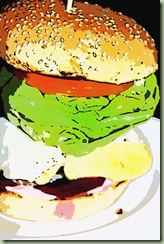
SONY DSC As the evening grew older we checked into the Belfast International Youth Hostel for our brief stay, and then walked into town to try to find some dinner.  This was easier said than done, as it appears Belfasters are far more interested in drinking than they are in eating.  Eventually we located a GBK and tucked into some New Zealand-style burgers; Phil and I had the kiwiburgers, although of course I had it without the noxious beetroot.  As the night stretched past midnight we strolled back to our digs past a multitude of locals in skimpy attire, most of whom were staggeringly drunk.  We were quite impressed with the fellow walking in front of us – well, ‘walking’ is a bit of an exaggeration, ‘slalom weaving’ more like, but at least he was capable of texting sweet nothings on his Blackberry at the same time.  Now that’s multitasking.

---

The next morning we enjoyed the offerings from the hostel cafeteria and then headed out to drive the Antrim Coast Road.  It was another clear, fine day: our luck had held.  First stop was the seaside town of Carrickfergus a short drive north of Belfast.  Here we paused to admire the splendid castle dominating the shore and the statue of William III, who landed here with his army in June 1690. 

DSC05483 - DSC05486 - 7488x2687 - SCUL-Smartblend 

A short drive north led us to the tiny village of Glenarm, where we stocked up on a Famous Five-style picnic at Sally’s Coffee Shop, which proved to be a great choice.  Glenarm boasts its own castle, and although we didn’t have time to check out its grounds we did admire the fine southern wall and gate.

Stitched Panorama

The picnic lunch was consumed at the pretty Glenariff Forest Reserve, with spectacular views down the glacier-carved glen to the sea.  Then, pausing only for an obligatory tangle with a herd of cows on a narrow country lane, we headed for the highlight of our visit to Northern Ireland: the famous Giant’s Causeway.  This peculiar geological formation carpets the coast near Portrush and is a major tourist attraction.  The curiously-shaped interlinked hexagonal spires are like the best outdoor set Blake’s 7 never had, and on a sunny day like we had hundreds of visitors were clambering over the rocks with glee. 

SONY DSCSONY DSC SONY DSC  SONY DSC

We drove to Derry, where R&P were staying that night and where I caught a train all the way back to Belfast for a mere £6.  It was time to part company with Ruth and Phil, which of course was a sad moment.  Luckily the trip back was somewhat adventurous, given I had to deal with a carriage full of bellowing, caterwauling locals who just about drove me mental with their shouting and mobile phone music.  Then once I finally moved seats, the chap sitting across from me was arrested by four police officers who boarded the train at Antrim.  Couldn’t work out what he was being charged with, but they stopped the train for 10 minutes to take witness statements from some passengers so it must’ve been reasonably serious.  Never a dull moment in Northern Ireland!

---

SONY DSC I had several hours in the morning before my flight back to London, so I walked the short distance from the hostel to the Botanic Gardens for a look around, and waited for the Ulster Museum to open at 10am.  The museum itself is excellent, and is particularly strong on both local art and history.  It rivals the National Museum in Copenhagen for the clarity of its narrative, with each room taking visitors through well-defined periods of history and showing the connections between everything.  I particularly enjoyed the pre-history section, medieval relics like the St Patrick’s Arm reliquary, and of course the museum’s famous Egyptian mummy, Takabuti, whose shrivelled head still bears flowing locks of ancient hair, and whose nails look like they’re definitely in need of a manicure.

It was an excellent few days in Ireland with great company.  I wish it didn’t have to come to an end so soon.  Next stop: New York!