Thursday music corner: Norwegian singer-songwriter Jenny Hval (b.1980) studied in and joined bands in Melbourne, before returning to Norway to a career as a musician, artist and writer. She released two albums as Rockettothesky in 2006 and 2008, followed by nine albums to date under her own name, including the two most recent releases on 4AD Records. Hval has also published four novels, two of which have been translated into English.
A Ballad appears on Hval's most recent album, Iris Silver Mist, issued in May 2025. The experimental art-pop album was named after a French perfume, and was described by Mojo magazine as 'an exquisite, sometimes spectacular achievement rich with emotive resonance'.
There is ample proof that New Zealand's demography and topography do not preclude good passenger rail. It is not uncommon for New Zealanders to return from Europe or East Asia, enthusiastic for the railway technology they encountered there to be introduced here, only to be told that other countries make for unsuitable comparisons. This can be true, but one country is eminently suited to comparison: Norway. It has similar, and indeed more difficult, topography; its population is less than half a million greater than New Zealand's; and its land area, likewise, is only modestly larger (especially when counting only Norway proper, not Svalbard or other possessions). Its largest city, Oslo, has roughly half Auckland's population; second-place Bergen is smaller than Christchurch or Wellington; Stavanger and Trondheim are comparable in size to Hamilton or Tauranga; and no other city has more than 100,000 people.
Norway's railway network is remarkably similar in length to New Zealand's, and also had an investment backlog in the 1980s. Today, Norwegians enjoy regular trains between all the major cities. In early 2020 Oslo had seven departures daily to Stavanger, four to Bergen and four to Trondheim, from where two daily connections ran to Bodø. Many more suburban and regional services exist, and almost none depend on tourism. All this, despite the fact that Norway's only high-speed railway links Oslo with its airport; none of the main intercity trips take under 6.5 hours and Trondheim-Bodø is approximately 10 hours. Inadequate roads or air services cannot explain the superior railway timetable: Norwegian roads are better than New Zealand's and intercity flights are frequent. Like New Zealand, Norway generates much hydroelectric power; unlike New Zealand, however, Norway has electrified many of its railways and is transitioning all non-electrified lines to zero-emission operation with battery trains. If Norway can operate a good long-distance railway network despite great obstacles, so can New Zealand.
- Andre Brett, Can't Get There From Here: NZ Passenger Rail Since 1920, Dunedin, 2021, p.277-8.
Thursday music corner: Stockholm-born singer-songwriter Stina Nordenstam (b.1969) has released six albums, starting with 1991's Memories of a Colour and, most recently, 2004's The World is Saved. She has released nine singles in her own right, and also guested with Vangelis on his 1996 track Ask the Mountains, and with Yello on their 1997 song To The Sea.
The Icelandic hymn 'Heyr himna smiður' ('Hear, heavenly creator'), performed live simply but stirringly by Árstíðir in Wuppertal train station in Germany, in 2013 [via Reddit]. The hymn was composed by Kolbeinn Tumason on his deathbed in 1208, after his defeat in the Battle of Víðines.
Last night I watched a recording of a BBC documentary that was made to promote Agnetha Fältskog's 2013 solo album 'A'. Ex-husband Björn Ulvaeus and former band-member Benny Andersson gave lengthy interviews to sing Agnetha's praises, while Anni-Frid Lyngstad didn't participate. The doco featured plenty of clips both before Abba and during the band's heyday, and it reminded me of huge success of Abba's pop output. Ulvaeus and Andersson had a gift for the mile-wide pop hook, that manifested itself in countless hits through the 1970s and early 1980s. Certainly, they were never particularly hip, and their Swedishness set them apart from their competitors - they sang in English, yes, but it was sometimes an odd variety. Guardian music writer Alex Petridis, in reviewing a massive Abba boxset released in 2005, hit upon the fearsome precision of the Scandinavian pop machine at its peak:
Waterloo (1974) has a loveable brashness and, crucially, no yodelling, which counts as an improvement, but 1975's Abba births songwriters Benny Andersson and Bjorn Ulvaeus' signature style: glossy harmonies, subtle orchestration, glam power chords, a melodic sense they claimed was derived from Swedish folk music, a certain fearlessness regarding hooks lesser writers might have considered too obvious, and a predilection for tick-tock rhythms as clipped as Agnetha and Anni-Frid's accented vocals. A year later, Andersson and Ulvaeus were on a remarkable roll, writing songs almost dreamlike in their perfection. Not just the singles - Dancing Queen, Money Money Money, Knowing Me Knowing You, The Name of the Game and Take a Chance on Me - but album tracks too: the glorious, expansive Eagle, the gripping Tiger. And yet Arrival and its follow up The Album still seem less like a product of the 1970s than the early 1960s, when LPs were afterthoughts, rushed out under pressure and padded with filler. One difference: a 1960s album's filler was forgettable, not an adjective applicable to Arrival's Dum Dum Diddle. Abba had written some weird lyrics before - What About Livingstone? admonished Swedish youth for their disinterest in great explorers, while Sitting in a Palm Tree concerned a man who dealt with romantic rejection by sitting in a palm tree ("I will stay here among my coconuts") - but Dum Dum Diddle is something else. It is a song about a woman who feels sexually threatened by her partner's violin. "You are only smilin'," she alleges, "when you play your violin / I wish I was - dum dum diddle - your darling fiddle." That was the thing about Abba. They either made you feel like you had temporarily ascended to heaven or they made you feel like sawing your own head off with embarrassment. The one thing they couldn't do was mediocre.
- Alex Petridis reviews 'Abba, The Complete Studio Recordings', Guardian, 28 October 2005
Listening to the hits again reminds you of the breathtaking talent on display, both in terms of the performances and, perhaps crucially, in the studios where the arrangements were perfected and polished to maximum effect. I confess I cannot listen to Dancing Queen anymore, due to massive overexposure on local classic hits radio, despite it being one of the greatest pop singles ever released. But there are so many more to consider. Chivalrous glam stomper Does Your Mother Know, with its polite 'no thank you, miss' groupie rejection, boasts a cooing harmony from Agnetha and Anni-Frid that erupts into an exciting see-sawing baying in the outro, and a shameless disco three-step into the chorus that is both immensely hackneyed and utterly thrilling at the same time. The timeless synth intro to Gimme Gimme Gimme, that proved so addictive that Madonna had to rent it for 2005's Hung Up. The melancholy strum of Knowing Me, Knowing You and the Alan Partridge-inspiring and instantly recognisable '...a-ha...'. The taut high-energy disco videogame score and descending end-of-verse vocal treatments of Lay All Your Love On Me. The fluttering pre-chorus synth flourishes in S.O.S, and the storming intro to Voulez-Vous (plus that 'a-ha' again in the chorus). And of course the classical descending piano chords in Waterloo that told all of Europe that Abba meant business during Eurovision '74.
And let's not forget that this world-straddling stardom was built on a foundation of some of the most gloomy and introspective lyrical content in pop. Abba excelled at the break-up song simply because by the end its members had experienced the pains of divorce within the band itself.
Perhaps then it's best to highlight an Abba track that is unashamedly up-beat. Tiger, mentioned above by Alex Petridis, appeared on the Arrival LP in 1976. Appearing near the end of the album's Side 2, it's a throw-away bit of pop fluff, but in its trebly burst of noise lurks a vivid pop thrill, all the way through to its helium-voiced finale. The live concert footage from a drenched Australian gig in Abba: The Movieshows the band at their peak, but I'm also keen on the album version, which is perhaps slightly quicker and therefore even more fun. Plus it boasts a film clip of the band driving around aimlessly in Stockholm traffic, looking moody.
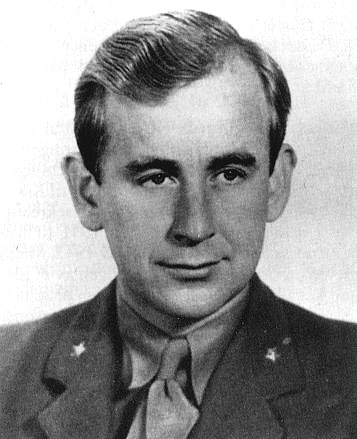
Last night I watched the 2008 Norwegian wartime biopic Max Manus, which highlights the astonishing bravery of Norway's greatest resistance fighter of the war. Norway was occupied by the Germans from April 1940 until May 1945, and during that time Max Manus (1914-96) was a constant thorn in the side of the German occupiers, escaping from Gestapo captivity to flee from Norway and eventually, by a circuitous route through the USSR, Turkey, Arabia, South Africa, the US and Canada, ending up in Britain to train as a saboteur. Aside from his legendary elusiveness, limpet mines were Manus' speciality, and with them he (and colleague Roy Nielsen) effected his most famous exploit in January 1945. Ten limpet mines were attached to the SS Donau, a 9000-ton freighter the Kriegsmarine had commandeered for troop transport work. The Donau sailed shortly after the mines were placed, and was sunk at Drøbak, a short distance south from the capital down the Oslofjord. After the war Manus started a successful office supply company, and he later retired to Spain.
The film Max Manus stands as a fine testament to the man, depicting both his enormous bravery and the psychological impact of the violence and loss that his resistance work brought. Aksel Hennie is excellent portraying the heroic but tortured Manus. The film is a big-budget affair, with hundreds of extras and major outdoor shots in urban areas and impressive set-dressing, which must have been a logistical nightmare. I wonder who they found to make that giant swastika ice sculpture, for one thing. The CGI use is particularly commendable - it's unobtrusive, and enough work has been put in to allow the director to pull off several key shots that would not have been possible only a few years ago.
I visited Norway in 2008 and at the Norsk Folkemuseum I caught a glimpse of wartime life for Norwegians during the occupation. Strict rationing was in place, and the Germans also banned loitering outside the state monopoly alcohol shops. So enterprising Norwegians did their best to be 'just passing' immediately before the store opened, and then all piled in to try to secure some all-important hooch, as can be seen in the before-and-after shots below, taken during the occupation.
BBC4 is going through a bit of an Icelandic phase at the moment, broadcasting a clutch of programmes from the sub-Arctic island, presumably in the wake of the unexpected success of another Scandinavian programme, the Danish crime drama The Killing. Last night I caught The Viking Sagas, an excellent documentary on one of Iceland's great literary treasures, the Laxdœla Saga, which tells a sweeping story of several intertwined Icelandic families from the earliest days of Icelandic settlement in the 9th century to the early 11th century. On my 2007 visit to Iceland I learned about another such story, Egil's Saga, in which the roguish Egil travelled throughout the Viking world and generally proved that he was a chap you definitely didn't want to mess with.
Both these sagas are characterised by an intriguing pre-Christian sense of morality, generally avoiding the didactic black-and-white judgements of later Christian-era fiction, in which duty and honour were rewarded and villainy and deceit punished. In the sagas there are few such moral judgements, with characters exhibiting all-too-human traits such as greed, lust, jealousy and dishonesty. And one of the strongest qualities of the sagas is that for the most part they tell the tale of real individuals and events, often exposing both the noble and base sides of individual characters.
The programme's presenter, Oxford art historian Dr Janina Ramirez, put together a well-crafted documentary on the Laxdœla saga, showing its place in contemporary history and fiction, and the lasting legacy it has on Icelandic literature and modern Icelanders. She talked to Icelandic and British academics, but also to Icelandic authors, actors and young people to discover the cultural significance of the saga. The short interview with Icelandic youth also speaks volumes for the importance of the sagas and literature in general for Icelanders; the youths are enthusiastic and eloquent (in well-thought-out English) about their appreciation for the stories. As one British newspaper review has pointed out, try replicating Ramirez's experiment by asking a bunch of British adolescents for their views on Beowulf or Chaucer, and see how far you get.
One of the beauties of studying Icelandic history is that it is one of the few long-established nations that can make the claim to having its complete history recorded for posterity. From its earliest days in the late ninth century AD, Icelanders have been telling and re-telling the stories of the colonisation from mainland Scandinavia, and once these stories were written down and printed in the medieval era, their historical legacy was ensured. We can even identify the early settlers by name:
The first settlers of Iceland were two foster-brothers, Ingolf and Hjorleif. They made a reconnoitre of the East Fjords in the late 860s, and around 870 returned to settle. Hjorleif was killed by his Irish slaves during the first winter, but after three years exploring Ingolf made a permanent settlement at Reykjavik. More settlers soon followed; most were from western Norway, but there were also Danes, Swedes and Scandinavians from the Hebrides. By 930 nearly all the good grazing land had been claimed. Except in the south-west, most of the settlements were close to the coast: the barren mountains and lava plains of the interior were, as they still remain, uninhabited.
The 12th century Icelandic Landnamabok (The Book of the Settlements) identifies some 430 leaders of the settlement period. Mostly men of aristocratic background, they brought their families, personal retinues and slaves. They took personal possession of the land, farming some themselves and settling their retinues as tenants on the rest of their claim. Early settlements were lawless, and disputes often degenerated into protracted blood-feuds.
- John Haywood, The Penguin Historical Atlas of the Vikings, 1996.
While I thought the documentary was excellent, Dr Ramirez raised two points that I feel could use some clarification. There are not vital to the understanding of the Laxdœla saga, but rather they are issues that would have complicated the story unnecessarily.
First, Ramirez suggests that when the earliest settlers arrived Iceland was as barren as it is today, with its dramatic landscape unclad by trees. This was not the case. The terrain in Iceland provides far from ideal conditions for trees to grow, but the lack of tree cover is man-made rather than natural. According to Wikipedia:
When the island was first settled, it was extensively forested. In the late twelfth-century Íslendingabók, Ari the Wise described it as "forested from mountain to sea shore". Permanent human settlement greatly disturbed the isolated ecosystem of thin, volcanic soils and limited species diversity. The forests were heavily exploited over the centuries for firewood and timber. Deforestation, climatic deterioration during the Little Ice Age and overgrazing by sheep, caused a loss of critical topsoil due to erosion. Today, many farms have been abandoned and three-quarters of Iceland's forty thousand square miles are affected by soil erosion, seven thousand square miles so seriously as to be useless. Only a few small birch stands now exist in isolated reserves. The planting of new forests has increased the number of trees, but does not compare to the original forests. Some of the planted forests include new foreign species.
Iceland's forests were too fragile and too heavily exploited by the wood-hungry settlers to survive, and once they vanished, much of the island's topsoil went too. Which helps to explain some of Iceland's more peculiar delicacies, like braised sheep's head and rotten shark - they had to eat anything they could lay their hands on.
The second observation Ramirez made about the settlement of Iceland was that it was empty of previous inhabitants. While it is correct to say there is no archaeological evidence of previous inhabitants, there are still reports that Iceland was inhabited by a few Irish monks when the Norse first arrived. According to the Encyclopaedia Britannica, the early 9th century Irish monk Dicuil made mention of such Celtic travellers: 'Completed in 825, his De mensura orbis terrae (“Concerning the Measurement of the World”) contains the earliest mention of Irish hermits having visited Iceland ([in] 795), where they marvelled at the midnight sun'. A later work, the 12th century Íslendingabók('Book of the Icelanders') contains the following passage on the first settlement (translated, naturally):
At that time, Iceland had woods growing between the mountains and the shore. Christians were here then, whom Scandinavians [Norðmenn] call Papar, but then they left, because they did not want to be here alongside heathen people. They left Irish books, bells and croziers, from which one can tell that they were Irishmen.
This is accompanied by the suggestion that several placenames in south-eastern Iceland, Papey and Papos, bear traces of Irish wandering monks.
Admittedly without archaeological evidence of Irish settlement there is no way of knowing if the Scandinavians really were the second people to come across Iceland. Even if Irish monks did make landfall in Iceland as part of their search for solitary penitence at the end of the earth, their numbers would have been very small, and the trace they left would be correspondingly tricky to discover.
Historian Axel Kristinsson thinks, on balance, that the claims of Irish settlers before the Norse came are unlikely:
Archaeological research can never disprove the existence of Papar in Iceland, and it is perfectly conceivable that remains might turn up one days with sufficiently strong Celtic Christian characteristics to prove beyond doubt that Papar once lived there. However, as yet no such remains have been found. Despite this, people have generally not seen any reason to doubt that there were once Papar in Iceland and been happy to trust Ari's testimony in the matter.
Recently, however, in his bookUm haf innan(Reykjavík, 1997), Helgi Guðmundsson has put forward the view that Ari's account in Íslendingabókis based on the account of the Papar by the Irish monk Dicuil mentioned above, which Ari interpreted as referring to Iceland, though without any firm evidence for this. If Helgi Guðmundsson is correct, the two accounts by Dicuil and Ari are not independent of each other; Ari's statement would then become worthless, and we would no longer have any sources linking the Papar with Iceland.
So the conclusion is this: there is no tangible evidence to prove that there were ever Papar in Iceland; indeed, there is good reason to doubt that they were. On the other hand, there is no reason to rule out the possibility either.
Perhaps I'll just stick to my first point about Iceland's forests, then.
A former British ambassador to Denmark, Sir James Mellon, published a book of observations about the country in 1992. It it, he remarked that ‘the Danes are not a nation … they are a tribe, this is the strength of their fellowship and the reason that they have unshakeable trust in each other’. Danish historian Knud Jespersen, examining Mellon’s thesis, points out that:
…according to Sir James Mellon, the Danes are not a nation in a normal sense, but a tribe, whose behaviour strongly reminded him of the tribal behaviour he saw amongst the Ashanti in Ghana during his posting to West Africa between 1978 and 1983. Amongst the Danes he found the same concern for the weaker members of society, the same propensity for consensus and uniformity, the same avoidance of conflict, and the same implicit faith that political results should be achieved through discussion and compromise rather than the face-to-face conflicts which are otherwise characteristic of parliamentary democracy. All of these traits, and most Danes would nod in agreement with his analysis, he attributed to the tribal awareness of the Danish population, which in his view make Denmark and the Danes quite special amongst modern European nations.
- Knud Jespersen, A History of Denmark, 2004
This is quite possibly true. However, my own investigation of the nature of Denmark was somewhat less thorough and significantly shorter in duration than Mellon’s stint in Copenhagen. To be precise, for three days over Easter I explored Copenhagen and the nearby town of Roskilde. In the process I admired plenty of Danish architecture, acquired an impressive limp from hours of walking on cobblestoned streets, and suffered a deluge that wreaked havoc on my flimsy £5 Superdrug umbrella.
My flights to and from Denmark were on the budget carrier Easyjet, the garish orange and slightly less rapacious understudy of Ireland’s piratically cut-throat Ryanair. The advantage of inexpensive flights was somewhat tempered by the inevitable sea of children aboard the flight and the corresponding seat-kicking tomfoolery that left me glad the flight was only an hour and a half in length.
As the Airbus banked into its approach path the view out the window showed the broad flat lands around the capital, which is perched on the eastern shore of the island of Zealand (Sjælland). This is not to be confused with Zeeland in the south-west of the Netherlands, which is the province 17th century Dutch authorities named New Zealand after. (Abel Tasman named the country Staten Landt when he passed by in 1642. But I digress).
Having taken a connecting flight through Copenhagen’s smart Kastrup airport whilst returning from Russia in 2008, I was familiar with the friendly five-second border check passengers arriving in Denmark enjoy. They still find the time to stamp your passport though. After collecting my bag it was a simple escalator ride downstairs to the airport train station for the 12-minute ride to the central station in town.
A ten-minute night-time walk eastwards from the central station past the closed gates of the famous Tivoli amusement park (still closed for the off-season during my visit), through the open expanse of the Radhus plaza (the square in front of the town hall), and near one of the city’s many canals, led me to my hostel. It was a great location in the middle of the city, and benefited from the usual Scandinavian attention to cleanliness and organisation. Some pitfalls emerged during my three night stay, though. For one thing, the hostel’s popularity with young clubbers meant that there was a constant flow of people into the dorm all through the night and into the wee small hours, most of whom had failed to learn the cardinal rule of backpacker etiquette, which is to minimise noisy backpack zip action in a sleeping dorm. There were also no drinking fountains and the bathroom sinks were so small that I couldn’t fill my water bottle. In the end I had to fill it with lukewarm water from a shower head! Yes, I felt slightly daft, but at least I got a very clean arm as a by-product.
My first full day in Denmark was spent exploring Copenhagen, which is well set out for tourists on foot. Starting out before 9 o’clock the main pedestrian boulevard, the Strøget (‘the Sweep’) was nearly empty, and I walked along its cobblestone walkways peering in the windows of the various retailers and boutiques. By mid-morning the Strøget was heaving with pedestrians, with Danes undertaking their weekend promenades and window-shopping in the smart department stores. I veered southwards to take in the island of Slotsholmen, home of the Danish royal palace of Christianborg. (The names of Danish monarchs usually alternate between Christian and Frederick, so the range of historic placenames can be a bit restricted). Walking through a broad archway visitors emerge in a spacious central palace courtyard with a carefully groomed dirt track for equestrian exercises, which is a nice touch in the middle of a big city.
In the afternoon I spent several hours engrossed in the National Museum. I was expecting its collection to be strong on the Viking period, and it was, but the pre-Viking early history collections were superb too. Many of the museum’s riches have emerged from Denmark’s voluminous peat bogs, where artefacts were lost accidentally, thrown in or buried as sacrifices, or stashed and lost for reasons unknown. A highlight was undoubtedly the astonishingly detailed Gundestrup Cauldron, a huge silver vessel in the Thracian style made the century before the birth of Christ, carved inside and out with superb Celtic-style engravings. No-one knows exactly where it came from, why it was made or why it ended up in a Danish bog, but since its discovery in 1891 it has been one of the greatest treasures of Danish prehistory.
I should probably mention that during my day’s exploration of the capital I didn’t make the trek around the harbour to visit Copenhagen’s most famous tourist attraction – the statue of the Little Mermaid. I actually had no intention of visiting it, as the uniform reaction of those who devote the time to the long walk seems to be ‘is that it?’ But I was saved the admittedly minimal temptation of the iconic statue by the fact that when I visited Copenhagen the statue was actually on her first overseas holiday. She was on loan to the Shanghai Expo, having been removed by crane and shipped to China.
On my second day in Zealand I ventured out of town. It was a relatively late start because the various clubbing dolts in the dorm had kept me awake all night, so I inadvertently slept in until 9.30am. But with the train station only a short step away I was on a train in no time, bound for the nearby town of Roskilde. My wallet was considerably lighter for the journey, with a one-way ticket costing about £12 for a brief 35-minute journey. Roskilde is probably most known these days for its annual rock festival, which sees thousands of fans descend on this quiet town for a massive party. (This year’s headliners for the July festival include Gorillaz, Muse and Patti Smith, not to mention the Narasirato Pan Pipers from the Solomon Islands).
The day I visited Roskilde was about as far from the rock ‘n roll lifestyle as it’s possible to get. The skies had darkened and unleashed a continual downpour. It was a Sunday so all the shops were shut, and almost no-one was around. Still, there were two things I really wanted to see in Roskilde, and not even the prospect of a disintegrating £5 umbrella from Chelmsford Superdrug could deter me.
The first was the superb waterfront Viking Ship Museum devoted to five Viking-era ships that were recovered from the Roskildefjord in 1962 and reconstructed with painstaking accuracy. The remains of these 11th century ships may not be as spectacular or old as those I saw in the similar museum in Oslo in 2008, but the range of vessels recovered, from a fat trading ship to a sleek longship built for raiding, means the Roskilde museum makes a major contribution to our understanding of Viking ship-building. The most likely explanation for the vessels’ deliberate sinking was that the townsfolk of Roskilde were hurrying to block a narrow passage in the fjord to forestall an invading fleet.
The second was back up the hill in the middle of town - the pointy-spired brick cathedral that houses the remains of the Danish royal line stretching back into the Middle Ages. It’s changed a lot since it was constructed in the 12th and 13th century, with more and more lavish burial chapels being added as centuries of monarchs shuffled off to join the choir invisible. My favourite was the chapel of Christian IV, which aside from being decorated with splendid murals and a fine statue of the king himself, also boasts marvellously ornate iron lattice gates wrought by Caspar Fincke in 1619. It’s said that when they were made no-one believed a mere mortal could work such genius, so they must be the work of the Devil. Obviously they didn’t say this particularly loudly, because the gates have adorned the cathedral for nearly 400 years.
My third and final day in Zealand was truncated due to my return flight leaving at 5pm. I had mused about the possibility of taking a train over the Oresund Bridge to nearby Malmo in Sweden, just to be able to say that I’d taken a detour and ended up in a neighbouring country. But the continuing rain put me off this idea, so instead I stayed in Copenhagen and checked out a few of the sights I’d missed on Saturday. First stop was St Saviour’s Church in Christianhavn with its beautiful spiral tower, one of the signature postcard images of the city. Equally grand yet rather more obscure was the gaudy Frederick’s Church, otherwise known as the Marble Church, which is like a mini-St Peter’s tucked into a cramped Georgian square.
Finally, I spent a few hours in the national art gallery, which boasted an excellent collection of European and Danish art. I was initially dubious when the first room I entered contained gloomy paints with names like And In His Eyes I Saw Death. Downer, dude. But it turned out that was the focal point for mordant paintings, and the rest of the galleries were full of the usual portraits and landscapes. Particular favourites included works by Cranach and Durer, and the sitcom humour of Carl Bloch’s 1866 work, In A Roman Osteria, in which the viewer is regarded with suspicion by an Italian gentleman who fears that his comely sisters are being eyed up, while the sisters in question clearly have no problem with the attention.
Soon it was time to make my way to the airport and return to England. It had been an entertaining few days in Zealand, and while I still regard the other Scandinavian capitals I’ve visited with considerable esteem, I was glad to add Copenhagen to the list and experience its sights in person. Indeed, my aching cobblestone heels attested to the diligence with which I undertook my exploratory duties.
It’s only 40 minutes by Finnair Embraer from Stockholm to Helsinki, flitting across the Gulf of Bothnia and over the Åland Islands. Next time you’re passing this way, I recommend you just sit back and enjoy the complimentary International Herald Tribune like I did, pretend global jet-setter that I am. As Helsinki filled my cabin window and the plane came into land, I planned my brief Finnish interlude. Another hot Scandinavian summer’s day beckoned!
I quickly hopped a bus to the main train station in the heart of the city, and after admiring its stern-looking statues I navigated my way to my hostel about 10 minutes away. After dropping my bag (top bunk again, dammit) I set out to explore the neighbourhood.
The nearby Finnish design shop impressed with its modish and relentlessly clever objets, particularly its fun artificial snowballs, which would be ideal gifts for friends in hot climates, or for people who like throwing things at people but don’t actually want to hurt them (much).
As the afternoon merged into dusk I ate watermelon slices in a busy city park, and in the evening I returned to the hostel to read my Iain Banks book (‘The Algebraist’, recommended) and also chatted to the elderly Englishman in the dorm who lives in Spain but takes his holidays in Finland every summer to avoid the heat. There’s no pleasing some people…
==
It proved to be the first proper night’s sleep lost to snoring, but it wasn’t the English chap’s fault: rather it was a middle-aged American guy who proved to be suitably apologetic yet annoyingly chipper in the morning when challenged by his grumpy, sleep-deprived roommates.
I walked in the bright sunshine through Helsinki’s inner suburbs to the former factory housing the Museum of Photography. It wasn’t a big place but I enjoyed the exhibits, particularly the collections of quirky shots of Finnish social scenes, including a punk-ish youth sledging down a snow-clad slope in a half-opened suitcase. There was also a strong collection of international photojournalism images, including a wall-sized print of a famous image from 2002 of a white horse dragging its chain along a Gaza street, galloping to elude an Israeli armoured personnel carrier, and an exciting photo taken by a helmet-mounted camera on a base-jumper hurling himself off a cliff at Chamonix: past the fluttering fabric of his jumpsuited arm you could see his fellow basejumper plummeting ahead of him, and the onrushing earth looming closer and closer…
I jumped aboard Helsinki’s extremely orange-coloured metro for the quick ride back into the central station, and then tracked down Steve and Fiona, newly arrived on the morning ferry from Tallinn in Estonia. They were lunching in the Kauppatori market on the waterfront, which was thronged with shoppers eyeing for bargains or admiring the feats of street gymnasts or a sprightly marching band.
After their repast we visited the nearby Senate Square, with its northern side bordered by steep stairs leading up to the city’s white shining Lutheran Cathedral, the Tuomiokirkko. As we admired the view several busloads of Russian naval cadets from St Petersburg arrived and proceeded to do the same thing. They proved popular with a gay American tour-group, who had their photos taken with them. What was the old saying? ‘All the nice boys love a sailor’?
While Fiona went to take a look around the shops, Steve and I visited the National Museum, which was strong on Finnish pre-history and medieval times, but didn’t seem to feature any tales from the bitter Winter War against its Soviet neighbour during WW2. Besides a clutch of medieval swords, one display depicted a reconstruction of a 12th century matron’s garb to good effect. There was also an impressive ceiling mural in the entry hall illustrating scenes from the Finnish national legend, the epic poem known as the Kalevala.
After a tasty kebab dinner in a stylish shopping centre we wandered the sunny streets of Helsinki for a while, admiring the shops and noting the presence of hundreds of excited Finns and other visitors crowding the capital for that evening’s massive Iron Maiden concert. The Scandinavians love their hard rock, you know. Every other person seemed to be wearing an Iron Maiden t-shirt. It was quite like visiting Glendene in Auckland's western suburbs in that respect.
After some supermarket shopping for supplies we parted company for an early night – because the next morning our brief stay in Finland would end as we boarded an early morning train bound for the Russian border.
==
While I’d set my alarm for 6.20am I woke up at least an hour before that time due to the ever-present Scandinavian sunlight. There had been no repeat of the noxious snoring of the night before, thankfully. As I walked to the train station I was careful to avoid the odd broken beer bottle adorning the footpaths in the wake of the Iron Maiden concert, but the street cleaners were already busy tidying up the city before the Saturday morning shoppers hit town.
Soon it was time for the 07:23 express to St Petersburg to roll out of town, and we waved farewell to Helsinki. As the pine-clad and lake-dotted Finnish countryside fled past the windows I enjoyed a delectable Finnish treat: yoghurt-coated dried banana chips, or ‘valkosuklaajogurttibanaanilastu’ to you and me. Ask for it by name!
After a few hours we slowed to a halt at the Finland-Russia border town of Vainikkala, where stern-looking (but were we just being judgemental?) Russian border guards collected all the passengers’ passports and took them away for processing. It always makes me nervous losing sight of my passport! But there were no problems at all, and the train was allowed to move slowly off, gradually increasing its speed as it crossed the border and moved onwards into the heartland of Mother Russia, where the next stage of our travel adventure was about to begin…
Here’s a sign of the times: arriving at Stockholm’s Arlanda airport I was slightly disappointed to find no border controls to speak of, because it meant I couldn’t get a Swedish stamp in my passport. That’s the Schengen agreement for you: it may be convenient and quashes travel hassles in Europe, but it’s hard cheese for passport-fillers.
Soon after withdrawing some Swedish kroner I was on the bus to the city, 40 minutes away along tidy, uncrowded motorways. No, I didn’t notice any Ikea stores on the way, but there were plenty of Volvos and Saabs.
The bus dropped me at the central station and I walked the short distance to the hostel I’d chosen. The City Backpackers Hostel is ideally situated in the city centre, and while the small dorms were a bit crowded the place was well equipped, with free internet access. It also had a mildly tiresome ‘no shoes’ policy inside, which reminded me that I definitely needed to replace my cheap and holey socks from Primark.
At the check-in desk I had my first encounter with the legendary beauty of Swedish womenfolk. I had been dubious of the stereotype before I arrived, but the hostel had very sensibly put its best foot forward in choosing this young Hostel Venus. Like many of her countryfolk she spoke perfect English, as long as you include speaking with an American accent within the definition of perfection. She was playing a jazz CD and we chatted briefly but enthusiastically about quality Swedish singers like Lisa Ekdahl, Stina Nordenstam and Rebecka Tornqvist, who all feature in my CD collection. (I’ll write a post about them one day soon)
Women such as Hostel Venus are seldom long out of the spotlight, so it was amusing to watch an American student trying to chat her up a short while later whilst trying to appear super-suave. He even did the famous ‘wink and finger-pistol farewell’! I thought people only did that in rubbish movies.
Soon it was time to call it a day, and as a summer lightning storm lit up the pale dusk with impressive flashing and crashing, I drifted off to sleep.
==
It was an early start the next morning due to the short night and the early sunrise – I was awake at 5.30am. The storm the night before had given way to a clear warm day with charming blue skies and the thermometer was rising quickly.
Taking advantage of the early hour I set out to reconnoitre and get my bearings. Stockholm is a harbour city arrayed on the mainland and a series of islands linked by graceful bridges. The centre of the old town is the famous island of Gamla Stan, but I detoured to the neighbouring islet of Riddarholmen, the knights’ island. The islet is dominated by the perforated wrought-iron spire of the Riddarholmskyrkan, and nearby the Riddarhuset (the House of Nobility) exudes a restrained regal air.
Gamla Stan is close by, and wandering down its curving streets visitors can get an impression of town life in Stockholm centuries ago. If the contemporary Gamla Stan is anything to go by, there were plenty of tourist trinket shops, boutiques and cafes in medieval Stockholm. Up the slight slope from these streets, the entire crest of the island was occupied by the truly massive Kungliga Slottet, the Swedish royal palace: the largest in the world with 608 rooms.
Having read my Lonely Planet before arriving in Sweden I had been pleased to note that museums in Stockholm were mostly listed as free of charge. Of course as the disclaimer goes, ‘prices change’, and in this case they’d changed rather drastically, given that all of them had entry fees of at least five quid. Perhaps they only charge entry fees during the summer tourist season. So instead of going on a massive free museum binge, I targeted a select few and spent the time I saved roaming through Stockholm's boulevards, esplanades and bridges, admiring the fine and graceful architecture and the happy faces of the locals and visitors enjoying the summer heat and the sparkling harbour.
It was at this juncture that I purchased a pocket spirit level in the Architecture Museum shop, for reasons that are not entirely plausible or justifiable. But I will now be able to leave the house secure in the knowledge that my pockets are exactly perpendicular to the footpath.
In the impressive plaza next to the palace I noticed that the Royal Mint Museum had a sign outside saying ‘free entry’. I rushed inside to take advantage of this rare munificence, only to realise that the Royal Mint Museum wasn’t exactly the most fascinating museum on the planet. Still, it did have the perfectly mad exhibit of the largest struck coin in the world: the huge lumpen ingot struck in 1644 looked like a massive copper doormat. (There’s a lot of rather tedious debate about the actual holder of the title of the world’s largest coin is, but this Canadian one is probably the current holder of the largely pointless title). There was also a nice selection of Viking hack-silver to covet behind the security glass.
Wandering up the hill I chanced upon the afternoon changing of the guard at palace, which is quite a tourist attraction as it is in London. The thing that distinguishes the Swedish version is the polished and lacquered helmets of the Swedish guardsmen, which closely resemble the faintly silly spiked helmets worn in WW1 by the German Army.
Having my lunch under a tree in one of Stockholm’s many parks I noticed a steady stream of tidily-dressed but relatively down at heel passers-by sifting the park’s rubbish bins for plastic bottles. Each bottle returned earns the holder 1 kroner, so a determined search at a busy lunchtime can earn the city’s poor some handy spare change.
By this time I had also formed a more advanced theory regarding the aforementioned pulchritude of Swedish females, which is famously enhanced by their glorious icy blonde Scandinavian tresses. Professional geneticists would perhaps be in a better position to explain the curious prevalence of what I dubbed ‘Scandinavian Follicular Variegation Syndrome’, in which women’s hair darkened dramatically as it neared their scalp. Someone should alert the media in case it's contagious.
I also noticed a selection of children’s books in a second-hand shop window, including an impressive collection of Biggles books in Swedish. But I admit this one caught my eye: and before you say anything, the title translated is ‘Lotta hits the spot’. Perfectly innocent.
After a massive day of pounding the footpaths of Stockholm in the sunshine, I was feeling the effects of the early start. But an Aussie chap from Canberra in my dorm was keen to explore the city at night, so we headed out for a stroll in the mild evening air, admiring the city lights, looking wistfully at the expensive bars, and discussing previous backpacking exploits. It had turned out to be a long day after all.
==
The next day proved to be a carbon copy of the day before: another hot day with lots of walking. After purchasing some breakfast and lunch from a department store I walked along the pretty waterfront boulevards and over the bridge to Djurgärden island, which hosts the huge warehouse-like structure housing the world-famous Vasa Museum, which was the main reason I’d been longing to visit Stockholm.
The Museum holds just one major exhibit, but it’s truly one of the most awe-inspiring and unfathomably spectacular sights you’ll ever see in any museum. As you enter the site through a series of three air-tight doors, you emerge into a cavernous shrine to maritime history. Before you, resting on its keel and supported by massive beams, looms a real 17th century warship, the finest of its day. The Vasa confronts first-time viewers with the grandeur and sheer improbability of its existence, and yet this huge vessel is real – it is no modern replica. This really is a warship built in 1628, and it's right before your eyes, as if it had sailed straight out of a history book.
Some of you might have seen the vestiges of the Mary Rose in Portsmouth (I wrote about it last year), and that is an impressive sight – older than the Vasa but far less complete. It's a mere fragment of a hulk in comparison to the Vasa, which is approximately 90 to 95 percent intact. When it was launched the Vasa was a revolutionary design: the first double-decked warship to have heavy guns on both the lower and upper gun decks. Yet it sank to the bottom of Stockholm’s harbour only an hour or so after its launch on Sunday, 10 August 1628, killing about fifty of its passengers. But while the ship was lost, the low salt levels of the Baltic waters meant that the vessel survived intact on the seabed, because shipworms cannot live in such an environment. Rediscovered in 1956 and raised in 1961, the Vasa was so well preserved that it was even able to float unaided after 333 years submerged.
While the Vasa was the star attraction at the museum, out the back there was a small wharf with some decommissioned ships tethered up. I was impressed to note that for the first 43 years of its duties the icebreaker Sankt Erik (1915) had an open bridge. You’ve got to hand it to the Swedes, they’re a (fool-?) hardy lot.
After a spot of lunch I walked back into town to enjoy a few hours at the History Museum, which had a strong collection of Swedish artefacts. I particularly enjoyed the Viking gold hordes in the basement: it’s fortunate that the lights were dim because the glare from all that looted precious metal would’ve damaged my eyes otherwise. (No pics allowed in that bit, drat)
There was also a 12th century reliquary for some small bit of St Elizabeth’s person, which must’ve been important because it hadn’t been melted down. It was a round goblet, and a bit of later reading revealed that it supposedly contained the saint's cranium when it was brought to Sweden as part of a hoard looted in the Thirty Years War.
And there’s always something interesting being dragged out of a peat bog these days: there was a superb glass case exhibit displaying a mannequin wearing an old cloak, which seemed completely intact apart from a few scratches here and there, and the pattern in its fibres was still strong. On reading the caption, I discovered that this cloak had probably been made sometime between 360 and 100 BC. It was at least 2100 years old!
I also got a cheap laugh from a placard in an empty exhibition hall, proclaiming that the space was, in effect, an art installation called Work In Progress, and that ‘This gap contains hundreds of different choices and decisions, compromises and prioritisations and ideas that never happened. It is a process that we live with every day’.
To round out the day I walked to the southern suburb of Södermalm and took the lift up to view the city from on high (well, not very high, but it was still pretty). When I returned to the hostel later on I found I had fallen prey to one of the traditional perils of dormitory dwellers: I had hung my microfibre towel up to dry and someone had pinched it, thinking I had checked out and left it behind. The fiends! Fear not, for I have another.
==
There was a little time in the morning for one last walk around downtown Stockholm before I departed to catch my lunchtime flight. I paused a moment to admire the freakishly expensive Kosta Boda glass vases in a shop, and then packed my gear and made my way onwards. Stockholm, I had a great time and I hope to visit you again some day! Next stop: Helsinki…
The day after my visit to the Palace, I packed my bags and set off for my summer holidays in Scandinavia and Russia. The plan was to spend a little time seeing Norway and Sweden before meeting up with Steve and Fiona in Helsinki. From there we’d take the train to St Petersburg and commence our nine-day tour of Russia.
I departed Southfields in a rain shower, walking down to the Underground station in the balmy drizzle. After a quick change at Earl’s Court, I was at Heathrow in less than an hour, examining the new Terminal 5 that had experienced such gratuitously bad press when it was opened for business and distributed its passengers’ bags to the four winds. But it has sorted its act out now, and the BA-only terminal now works well and benefits from the spacious and modern design so the travelling experience is most un-Heathrowish, in that it proceeds smoothly and without irritation.
With this major airport-not-sucking surprise out of the way, the 100-minute flight to Oslo proceeded without incident over the North Sea, up the Skagerrak and along the winding Oslofjord. Soon I was on the ground in friendly Norway, negotiating the immigration process with my traditional left ear decompression deafness leading me to rely on the usual mix of smiling and nodding in the hope that I was agreeing with positive statements rather than accusations of smuggling.
The airport is quite a way outside of Oslo, but they’ve thoughtfully built a train station underneath it. These Norwegians think of everything. It’s kitted out for the winter cold too: the escalators down to the platforms are encased in glass and you exit through air-sealed double revolving doors that keep the heat in. Going through them felt a bit like visiting a space station, as opposed to travelling on British Rail, which is more akin to a visit to a freezing works, only slightly less offally.
The tidy streets of downtown Oslo were sparsely populated when I arrived in the late evening, and after a bit of elementary orienteering and a ten minute walk with my trusty pack I arrived at the Anker Hostel, my home for the next three nights. After an initial hiccup in which I was assigned a dorm room plentifully populated with Poles but with no spare beds, I ended up in a nice spot with a bed next to the window. There was still plenty of light at 11pm when I turned in – Oslo is 60 degrees North, after all: the equivalent latitude in the Southern Hemisphere lies somewhere between Cape Horn and the Antarctic Peninsula.
==
Breakfast wasn’t included in the hostel price, and what was offered seemed jolly expensive, so I started the day the same way I did in Iceland last year: a quick trip to the supermarket. As it happens, the most common supermarket chain that I saw in Norway was called ‘Kiwi’. Norway is famed for the costliness of its food, and as for alcohol, you might as well forget it. Even the Kiwi supermarket was quite punishing on the wallet, but it beat the alternative, so I loaded up on breakfast and lunch there.
It was a bright and sunny day in Oslo, and I patrolled the city to get my bearings. I was soon wandering along the waterfront in the sunshine, admiring the harbour and watching the fishermen pull in small catches here and there. At the wharf in front of the Radhus (town hall) I took a small ferry on a short trip across Oslofjord to the nearby Bygdøy peninsula, which holds a brace of interesting museums.
First stop was the Norsk Folkemuseum, a large park-like collection of traditional Norwegian farm buildings and exhibits on Norwegian home life. The impressive courtyard soon gave way to winding dirt tracks through pines and shrubs, giving a real village feel to the place. One of the first buildings I came to was a small sod-and-grass roofed hut that turned out to be a 19th-century schoolhouse. The noise of a primary school lesson being conducted in Norwegian emanated from within, so I went in for a look. To my surprise, rather than a recording of a lesson, there was an actual lesson taking place, with a stern-voiced schoolmistress in proper garb teaching about a dozen children aged about eight to ten, all of whom were also in period costume. As it was a weekday, the first thought that occurred to me was, ‘hang on, this lot should be in school… oh wait, they are…’
Further up the path, at the head of a sward of lush grass lay the museum’s most famous building: a traditional Norse stave church, originally built in Gol in the 12th century. Inside, the dark wood was carved with devotional scenes, and you could imagine the dark and narrow chapel in the depths of a medieval winter, filled with fur-wrapped worshippers stamping their feet to keep warm.
Other buildings on display included a wide range of farm dwellings from recent centuries, with a strong emphasis on the traditional log-frame construction that befits a nation with plenty of trees to spare.
In more recent times Norway was subject to German occupation from 1940 to 1945, and in one exhibit the museum illustrates one of the smaller challenges faced by the Norwegian people. Alcohol sales, traditionally heavily regulated by the state, were heavily rationed during the war and the Germans also outlawed queuing outside the state monopoly stores before opening time. In response to this, the Norwegians adapted by loitering in the street in the general vicinity until just before the shops opened, and when the doors were opened there was a stampede of hundreds trying to get inside to get their prized grog rations.
There was also an museum of national costume, with an entertaining diorama of the traditional Norwegian hat-kicking dance. Designed to show a suitor’s physical prowess, apparently the girl holding the hat on the end of a broomstick would vary the height of the hat depending on how much she liked the chap. If she didn’t like him, he might pull a ligament before he managed to kick the blasted hat!
After a pleasant morning at the Folkemuseum, I walked a few hundred metres to the specially-built Viking Ship Museum, which houses the remains of three ships, which had all been buried as part of chiefly funeral rites. The Oseburg ship is probably from the 8th century, the Gokstad ship is probably 9th century, and the more fragmentary remains of the Tune ship are probably from around 900 AD. Together they represent a tremendous historical resource and are a vibrant glimpse into the soul of the Viking mind, for the Norse were defined by their sea-going prowess. I took the photos that everyone else takes: the beautiful raked bowsprits of the longboat, topped by whorled crosier-like peaks and with intricately-carved keels depicting Norse dragons and sea-monsters. There was also a collection of the other grave goods buried with the ships to sustain the chiefly afterlife, including some ornately carved wooden sleds.
Not to be content with a mere two museums, I went on to the nearby Maritime Museum, which boasted a five-screen panoramic film of the dramatic Norwegian coastline. Aside from the usual nauticalia amongst the museum’s exhibits, chief of which was the twisted, gnarled remains of a 2200 year-old dugout canoe, I also enjoyed the slightly mad exhibit of a fully-rigged sailing ship made entirely from cloves. The museum was a fairly casual place - upstairs in the art gallery section there was no-one around so I shut a door opening onto the sea breeze, which was causing a batch of 19th century ship paintings to flap and clatter around like they were trying to take off.
I took the bus back to the hostel to dump my stuff and shelter from the Scandinavian sunshine for a short while, and met one of my dorm-mates, a young chap from Korea who was cooking his dinner. He asked me ‘do you like life?’ I took this to mean either:
A) I am a born-again evangelist type, watch out;
B) I am quite depressed and enjoy telling strangers about my psychological problems; or
C) I am a hostel-dwelling psychopath, so if you like life I wouldn’t get too attached to it, if I were you.
Turned out it was just a translation issue. He meant ‘rice’, not ‘life’. As it happens, I like both, but I’d probably pick the latter over the former, if push came to shove.
As the afternoon heat waned I visited the splendid Oslo opera house on the waterfront, with its daring angles and high-tech aluminium panelling giving it a futuristic air. In winter-time cityfolk carry their skis up to the top and ski back down its roof, which has snow-traps and jumps to enhance the experience.
After a walk along the shopping precinct and main street of Karl Johann’s Gata, I dined on a kebab (one of the few halfway affordable meals available anywhere) and contemplated my successful first day in Norway.
==
The next morning I set out for Oslo’s castle, the Akershus Festning, which was constructed from the 1290s onwards, and still guards the city from its promontory overlooking the fjord. Army guardsmen patrolled the grounds and ceremonial cannons watched the Oslofjord, serving to protect the capital from the massive cruise liner docked nearby which almost threatened to overshadow the castle.
Then it was time to break my record: I saw four museums in one day. First up was the national art gallery, with its collection of Edvard Munch (not my cup of tea) and some splendid patriotic landscapes and maritime pictures. I enjoyed the small encounter with the Scandinavian mindset in the locker room where you deposit your bags: each locker requires a 1-kroner coin (10p) to close its lock, but rather than expect gallery visitors to pay, there was a bowl full of 1-kroner coins for the use of visitors. Nice to be trusted!
After a quick lunch I moved next door to the history museum, which was a real highlight. Its medieval woodcarvings and Viking exhibits were excellent, particularly carved scenes from a stave church portal from 1200 AD, and the amazing decoration on a medieval church roof, transplanted whole to the museum.
Next I paid a quick visit to the modern art museum, which occupies one side of a pleasant leafy square in the old town, with a bubbling fountain at its centre. The art collections were… rather pretentious, I thought. Case in point: an installation of a bicycle fitted with vacuum cleaner engines that switched on and off in seemingly random patterns. (Probably said something deep about cycling or vacuuming, either or). But just when I was snickering at a large collection of wall-hangings crocheted by two female artists using only discarded pantyhose, I read in a caption that these were the same artists that had decorated the opera house, so I pulled my head in a bit and tried not to be too judgemental. It was quite hard though.
As it was a super-sunny afternoon I coughed up about six quid for a public transport daycard and took a tram out to the suburbs to visit Oslo’s famous Vigelandsparken. Dedicated to the memory of sculptor Gustav Vigeland, these expansive gardens draw large crowds who admire the naturalistic and optimistic statues that Vigeland made throughout his life, which are displayed along a broad avenue and on a bridge. The avenue then leads to the park’s centrepiece, the impressive and surreal human tower, which comprises a mass of intertwined human forms rising into the sky. I also paid a quick visit to the Oslo Museum in the park's grounds, which told the history of the city but didn't really grab me as my feet were pretty sore by that stage!
Back in town on my evening promenade I heard a Norwegian girl busking Don’t Dream It’s Over by Crowded House, and then by the ferry wharfs I listened to an older chap playing twangy Shadows tunes through a battery-powered amp. A nice relaxing end to my second and last day in Oslo.
==
The next morning I arose at 7am, which is virtually the day before in backpacker-time, and after securing some supermarket food I departed Oslo on the 0811 train towards Bergen, bound for my next destination, the small lakeside town of Voss. The 5 ½ hour trip went quickly, with pretty Norwegian scenery to admire out the window. About halfway we were above 1000 metres and the train passed between alpine lakes fringed by holiday huts (with Norwegian pennants flying from flagpoles if the hut had occupants), and the rugged hills were flecked with snow despite it being the middle of summer. The train also passed a giant glacier, swelling in the distance behind the hills like a white volcano.
Eventually I arrived in Voss, and lugged my pack along the lakefront on the road out of town for about a kilometre to the local hostel, which in Norway is named vandrarheim, ‘wander-home’. I quite like that. Voss isn’t known for much and it’s a quiet sort of place, but I liked the feel of it. There are a few sights: the old Finnesloftet on the hill above the hostel is a medieval meeting house, there’s a stone church in the middle of town, and on the lakefront there’s a statue in honour of the town’s only famous son. Knute Rockne left here when he was small, but later became the biggest name in American football for Notre Dame in the 1920s. They later made a film about him, Knute Rockne All American (1940) starring Ronald Reagan as George ‘The Gipper’ Gipp – which is where the expression ‘win one for the Gipper’ comes from.
After a walk around town and its nearby nature trails I settled in on the pretty hostel verandah and watched the sun slowly set behind the snow-clad mountains on the other side of the lake, and enjoyed the traditional backpacker’s meal of a baguette and brie (Danish, apparently).
==
The next morning I revelled in the joys of staying in an official youth hostel (Anker was an indie) – breakfast was included, so I could indulge my fondness for muesli with yoghurt. The day was set aside for the well-known Norway In A Nutshell tour, which provided the opportunity to take in the beautiful Norwegian fjords and the famous Flåm railway.
The first leg of the journey was by coach to the head of a tributary of the massive Sognefjord, which is the largest and longest fjord in Norway. On board the coach a jumpy Japanese dad constantly shifted his wife and son between seats, trying to work out the best side for viewing the splendours on display. They moved seats at least five times. His son rolled his eyes and attempted to dispel his pre-teen ennui by taking photos with a loud synthesised noise emitted by his camera approximately every seven seconds of the journey.
Soon the coach was edging gingerly down the hair-raising Stalheimskleiva switchbacks, descending hundreds of metres to the valley below. At the end of the valley the coach dropped us at tiny Gudvangen, where we boarded the ferry Skagastøl for a two-hour trip on the fjord. As we pushed out into the still waters of Nærøyfjord the local gulls raced to shadow the ferry in the hope of a thrown morsel.
Several tiny villages perched precariously on the shore of the fjord, hemmed in by hulking sheer rock walls climbing hundreds of metres behind them. As the ferry emerged into the main arm of Sognefjord and turned to enter another tributary, the Aurlandsfjord, I got a Nikon-wielding Japanese gent to snap my picture (with my camera, that is) before a stiff rain-shower set in and doused the deck with spray.
After a pleasant journey the ferry docked at the tourist town of Flåm, which has a tiny population but sees umpteen thousands of visitors per year as it’s the head of a famous scenic railway. Its gift shops are filled with the usual tourist tat, generally featuring Vikings or trolls.
In the two hours I had before the train departed I went for a walk up the valley along peaceful country roads and through farmland. A ginger farm cat watched carefully as I made my way to the grand-looking Brekkefossen: a cascading waterfall dropping from the heights above the valley floor. It was a bit of a challenging incline but once I was level with the impressive waterfall it proved to be a splendid view back towards the wharf.
The track from Flåm to Myrdal was opened in 1940, takes an hour to travel a mere 20 kilometres, and is famous for the feat of engineering it took to hew its many tunnels and switchbacks from the solid granite. The views are tremendous. Near the top the train stops for a brief spell at another powerful waterfall, and we tourists are treated to a special performance. Raewyn had warned me to expect a mysterious happenstance that was very, very funny, but refused to tell me what it was to avoid spoiling the surprise. (Skip this bit if you're going to do the tour yourself!)
As the waterfall boomed and crashed we were visited by Norwegian water nymphs, who popped up from the rocks above and did a mystical little dance accompanied by some suitably ethereal music. Here’s hoping the poor sods had wetsuits on underneath their robes and wigs, else they’d have been soaked to the skin!
==
The next morning at breakfast I witnessed the Scandinavian tradition of eating muesli with raspberry jam instead of yoghurt or milk. You’d definitely need to brush your teeth after that! I also took this nice little video to give you an idea of how peaceful the lake looked.
Soon it was time for my train to Bergen, an hour westwards on the coast. The rain had set in by the time I arrived, so it was a fairly minimal exploration: I walked in the wet with my backpack on for an hour or so to see the old Hanseatic houses on the waterfront, took a few pictures, and then it was time to catch the airport bus for my flight out to Stockholm via Oslo.
As it happened, the check-in staff didn’t log me as a transfer passenger, so by the time I’d retrieved my pack from the hold luggage in Oslo the check-in desk for the connecting flight to Stockholm was closed! I had to lug my backpack into the cabin and squeeze it into an overhead locker. A bit stressful, but I got there in the end.
So I flew on to Sweden… It had been a super five days in Norway, and despite the expense I would love to return to see more of the country. But only if I can get some more of that lovely Oslo sunshine, rather than that sodden Bergen rain!