29 May 2014

Satan amongst the Sofa Cushions

Drusilla Clack is one of the fictional narrators in Wilkie Collins' groundbreaking 1868 novel The Moonstone - which I won't link directly to, because I haven't finished it yet and I don't want to know the ending! The book was written serially for publication in one of Charles Dickens' magazines, which encourages the author to devise cliff-hanger endings for each chapter, to keep the readers interested. Its twisting story of the theft of an enormously valuable Indian diamond is often regarded as the first modern detective story.

Miss Clack's narrative is the second in The Moonstone, after that of head servant Gabriel Betteredge. She is, for want of a better description, something of a busybody. It's somewhat daring for Collins to have satirised the no doubt familiar character of a well-meaning religious lady who pesters all her friends and acquaintances to improve their lives by focusing solely on the spiritual. Miss Clack is definitely well-meaning, but her entreaties to strive for godliness appear to fall mostly on deaf ears. She is undaunted by such setbacks, but often resorts to unwise subterfuge such as secreting her religious tracts throughout her subject's abode, so that they might 'accidentally' happen upon some edifying religious reading material, for example when retiring to the smoking-room, or when performing their morning toilet.

The tracts that Miss Clack favours focus heavily on the seemingly ever-present danger of sin and vanity, and the ways the Devil can inviegle his way into otherwise innocent-sounding activities. Who knew that a lady's parlour presented so many potential spiritual hazards?

The choicest tracts of Miss Drusilla Clack
  • Satan in the Hair Brush
  • Satan behind the Looking Glass
  • Satan under the Tea Table
  • Satan out of the Window
  • Satan amongst the Sofa Cushions
  • A Word With You on Your Cap-Ribbons
Wilkie Collins' friendship with Charles Dickens lasted for the best part of two decades from 1851 until the late 1860s. According to Dickens biographer Claire Tomalin:
Twelve years younger than Dickens, Collins ... had read for the Bar, but only at his parents' insistence, and he was a dedicated Bohemian. Dickens saw that he was gifted, a good journalist and a striking storyteller, and found his way of life, easy and unconventional in its dealings with women, interesting. The two men shared a taste for brightly coloured clothes. Collins might appear in a camel-hair suit with a broad-striped pink shirt and red tie, and even in sober colours his physical appearance was odd, with his big head and small body, a cast in one eye and a tendency to tics and fidgets. His best biographer says he made 'a more or less conscious decision to be not quite a gentleman'. Wilkie hero-worshipped Dickens, who had risen so high that he did not need to worry any longer about whether he was a gentleman or not.

- Claire Tomalin, Dickens: A Life, London, 2011, p.232.
See also:
Books: Wilkie Collins, The Moonstone (1868)
Books: Dickens & Dostoyevsky, 3 January 2014
Books: Asking writers stupid questions, 14 May 2014

27 May 2014

And what about the male parishioners?

"For Christ to enter your lives," Rev. Njohi of Lord's Propeller Redemption Church in Dandora Phase 2 (Nairobi) told his congregation, "all female members must come to church without their bras and panties. Undergarments are ungodly, and I strongly advise all female worshippers to go free.

At the last church meeting, I passed a law banning the wearing of inner wears. When coming to church, people need to be free in body and spirit to receive Christ. At Sunday service, ladies should be ngotha-less and bra-less. Mothers are advised to do the same, and to check their daughters when coming to church on Sundays, so they can receive Christ too.

I warn members that there will be dire consequences if they secretly put on their inner wears in church. Praise the Lord."

- Kenya Daily Post, 5 March 2014, quoted in Private Eye no.1365, 2-15 May 2014.

26 May 2014

Claude & Piggy become silent movie projectionists

How Claude became a silent movie projection assistant

The Parish Hall [in Ellerslie] was used for a variety of purposes such as wedding receptions and dances, along with compulsory military training. I used to help a young man named Charlie Double, who lived across the road, to clean the hall.

This was a great job for a five year old. One could find leftover lollies, last night’s dance cards in which the ladies would write down their next partner’s name (to avoid punch-ups I suppose!) and with pencil attached, sometimes money, and the odd packet of chewing gum.

On Saturdays if we were lucky Piggy [Roy] Day and I were allowed to help Charlie with the projection. Charlie had the projector attached to part of a bicycle frame with gearwheel, chain and sprocket, and one pedal – so if we stood on a box we could operate the contraption and according to the film Charlie would give us our orders, such as “Faster! Faster!” or “Slower! Slower!”, while Miss Poultan played the piano to music supplied with the film. Theme music.

Charlie could see the whole hall, the pianist and the screen, and suited the tempo to the kind of film. Even today I can ‘see’ cowboys being chased by Indians, or a train coming along a track which has a helpless maiden trussed along a track, where she is rescued just in time. I wonder how they did that?

If the Saturday afternoon kids got too rowdy old Charlie would switch on all the lights and that generally cooled them down. Those were exciting days.

- The Chronicles of Claude – extract from p.1, childhood days 1921-22

[Note that presumably at this early stage of his life Claude would still have been known by his first name, Oswald, but I've used his middle name as he did for the remainder of his life]

See also:
Movies: The Great Train Robbery (1903)
Movies: The Perils of Pauline (1914)

21 May 2014

He just stares back unblinking, so hologramic

David Bowie performing TVC-15, his 1976 single from the Station to Station album, live on the West German programme Muzikladen, on 30 May 1978. Bowie looks suspiciously healthy. The song was famously inspired by a hallucination of Iggy Pop, who believed a TV was swallowing his girlfriend. See also below the link for the 1976 Top of the Pops performance by the in-house dance troupe Ruby Flipper, which bears so little relation to the song that it's beyond perfect.


See also:
Music: TOTP - TVC-15 (Ruby Flipper dance routine, 1976, Savile alert)
Music: Bowie clipology, 8 January 2013
Movies: In the lair of the Goblin King, 12 July 2009

20 May 2014

Australian ad fail

So presumably someone in Vitasoy's ad agency in Australia thought that re-using the Australian slogan in New Zealand would be cheaper than devising something specifically for us. I probably shouldn't need to point this out, but New Zealanders don't give a toss if something comes from Australia or not. Hell, most shoppers don't even care if something comes from New Zealand.  (Unfortunately. Buy New Zealand made!). But something's true blue Ocker credentials are hardly the best way to sell a product to New Zealanders. Oh, and while at least they did splash out for a New Zealand URL (mentioned at the bottom of the ad), it just redirects straight to the Australian parent site. 

Vitasoy ad, Wellington

18 May 2014

My favourite parliamentarian

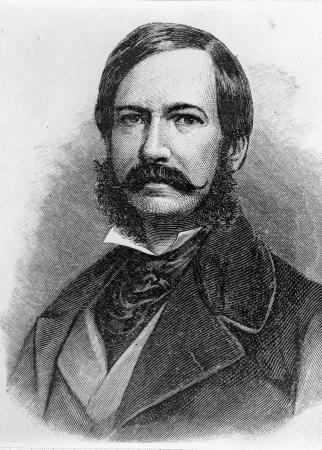
Edward Jerningham Wakefield
image via Te Ara
From the early days [Parliament's bar] Bellamy's had been the centre of parliamentary conviviality. C.W. Richmond described in 1862 how members got together nearly every night in Bellamy's for 'singing and joking and drinking whisky toddy'.

The 'widespread suspicion that much of the legislation of the period was being considered and carried in a miasma of whisky fumes' had some truth to it. Bellamy's featured as a weapon in the political struggles and in the stories of the time.

The most notorious incident involved [Edward] Jerningham Wakefield, whose fondness for alcohol was well known. In 1872, Fox's government whip attempted to secure Wakefield's vote by locking him in a committee room. Stafford's whip, hearing of this, 'got up on the roof, and lowered a bottle of whisky with a loosened cord down the chimney. When the division bell rang, the Whip rushed up to the committee room to get his sure vote, but, alas, it was "paralytic" under the table'. The government whip continued to ply Wakefield with alcohol, but he nonetheless voted with Stafford to throw out the ministry.

- John E. Martin, The House: New Zealand's House of Representatives 1854-2004, Palmerston North, 2004, p.47-49. 

Ronda Cooper's biography entry for Wakefield in the DNZB describes him thus: 'He was marked throughout his life, and beyond it, by a damning reputation for flawed and wasted brilliance. Most commentators, including his own father, dismiss him as a wastrel and a failure, talented and intelligent, but reckless, weak-willed, contentious, promiscuous and generally unstable'.

The New Zealand Herald of 31 March 1879 contains a brief paragraph on Wakefield's death, earlier that month, in Ashburton - 'Mr. Edward Jerningham Wakefield, formerly M.H.R. [Member of the House of Representatives] for the city of Christchurch, died at the Destitute Persons' Home, Ashburton, on March 3 where he had been staying there some time. He refused to allow his friends to be telegraphed for till the last moment, when it was too late. His last days were clouded by the same blot that had obstructed his later life, and the money obtained by writing articles for the local papers and other means was all devoted to the same purpose'.

See also:
History: E.J. Wakefield, Adventure in New Zealand from 1839 to 1844 (extracts)
History: NZ Company ship Tory arrives (1839)
HistoryThe last sight of old Plymouth, 6 April 2009