I've always had a soft spot for the Monkees, stemming presumably from the 1980s repeats of the TV series but also from the expert crafting of their pop sound that obviously echoed that of the Beatles. Everyone knows that the Monkees originally didn't play the instruments on their recordings, but as they matured as artists and performers they took over performance duties from the studio crews and became their own men.
Without the enormously valuable but highly regimented TV songtrack beaming their wares into millions of American homes the Monkees would never have been able to release an astonishing four US chart-topping albums in the space of 13 months from The Monkees in October 1966 to Pisces, Aquarius, Capricorn & Jones Ltd in November 1967. The army of session performers, initially, and crack songwriters helped to generate production-line pop, but the quality of what was released and the comedic talents of the performers themselves helped to seal the Monkees' fame. Michael Nesmith, Micky Dolenz and Peter Tork also developed as songwriters, gaining the confidence to stand up to their producers and record their own material alongside that of the hired guns.
Mike Nesmith was the strongest writer amongst the four, having had self-penned songs included from the first Monkees album. His fondness for the country-folk sound was perfectly evoked in You Just May Be The One on the band's third album, Headquarters, released in May 1967. A sensitive lyric paired with Byrdsian chiming guitar, the number featured in the first season of the TV show at the end of the episode 'Monkees a la Mode', in which the boys are ostracised when a high-class society magazine mistakenly praises them as fine and upstanding young Americans. Two minutes of pop at its finest.
See also:
Comedy: 'Monkees a la Mode' (TV episode)
Music: Michael Nesmith - Propinquity
Music: Michael Nesmith - Cruisin' (Lucy & Ramona & Sunset Sam)
10 September 2013
08 September 2013
The Australian election under proportional representation
As a momentary diversion from the news across the Tasman about the new Australian government to be led by Liberal leader Tony Abbott, it's worth remembering that the electoral system has a major impact on the outcome of elections. Australia's outdated and peculiar preferential voting system favours the big parties over the smaller ones, and the intentionally complicated process of voting 'below the line', requiring electors to rank every single one of the competing parties or else their vote is invalidated, has been rendered almost impossible by a profusion of joke and spoiler single-issue parties.
It's worth remembering that there is an easier and fairer way to conduct a general election, and that's the proportional representation system in use in New Zealand since 1996. Certainly it's not perfect, but it gives parties their fair share of Parliament, as opposed to the current Australian system. So instead of the current substantial majority for the Coalition, what would a New Zealand-style MMP election have looked like in Australia? Using the current first-preference results (n.b. counting is still underway) with a five percent threshold and an electorate-seat exemption, here's how it might have looked for Australia:
The Nationals' total of nine electorate seats is actually more than the seven seats they are entitled to from their share of the overall vote, so there would have to be two 'overhang' seats, taking the size of the Lower House to 152. A result like this would put the nine members of the Palmer United Party (which was only formed in April) in a prime position to choose the next government of Australia. The result would likely generate a victory for the Coalition, but it would require the support of the Liberals, Liberal-Nationals, the Nationals, the Country Liberals' one member and the Palmer United Party to form a majority government.
See also:
Results: AEC Virtual Tally Room
Politics: Political Compass - Australia 2013
Comedy: Clarke & Dawe - A Pollster?, 5 September 2013
It's worth remembering that there is an easier and fairer way to conduct a general election, and that's the proportional representation system in use in New Zealand since 1996. Certainly it's not perfect, but it gives parties their fair share of Parliament, as opposed to the current Australian system. So instead of the current substantial majority for the Coalition, what would a New Zealand-style MMP election have looked like in Australia? Using the current first-preference results (n.b. counting is still underway) with a five percent threshold and an electorate-seat exemption, here's how it might have looked for Australia:
|
Party
|
% vote
|
Seats
|
|
Labor
|
33.85
|
54
|
|
Liberal
|
31.70
|
50
|
|
Liberal-National
|
8.72
|
14
|
|
National
|
4.58
|
[9]
|
|
Country Liberals
|
0.35
|
1
|
|
Green
|
8.42
|
13
|
|
Palmer United
|
5.59
|
9
|
|
Katter’s Australian
|
1.00
|
1
|
|
Independent
|
-
|
1
|
The Nationals' total of nine electorate seats is actually more than the seven seats they are entitled to from their share of the overall vote, so there would have to be two 'overhang' seats, taking the size of the Lower House to 152. A result like this would put the nine members of the Palmer United Party (which was only formed in April) in a prime position to choose the next government of Australia. The result would likely generate a victory for the Coalition, but it would require the support of the Liberals, Liberal-Nationals, the Nationals, the Country Liberals' one member and the Palmer United Party to form a majority government.
See also:
Results: AEC Virtual Tally Room
Politics: Political Compass - Australia 2013
Comedy: Clarke & Dawe - A Pollster?, 5 September 2013

 Labels:
australia
Labels:
australia
07 September 2013
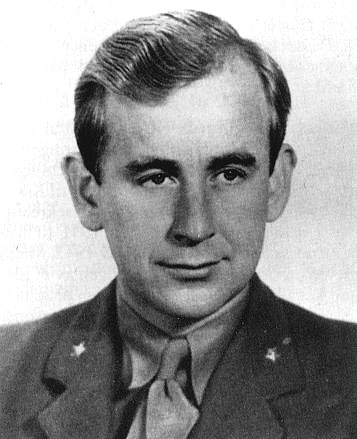
Norway's greatest resistance hero
 |
| Max Manus, via Wikimedia |
The film Max Manus stands as a fine testament to the man, depicting both his enormous bravery and the psychological impact of the violence and loss that his resistance work brought. Aksel Hennie is excellent portraying the heroic but tortured Manus. The film is a big-budget affair, with hundreds of extras and major outdoor shots in urban areas and impressive set-dressing, which must have been a logistical nightmare. I wonder who they found to make that giant swastika ice sculpture, for one thing. The CGI use is particularly commendable - it's unobtrusive, and enough work has been put in to allow the director to pull off several key shots that would not have been possible only a few years ago.
I visited Norway in 2008 and at the Norsk Folkemuseum I caught a glimpse of wartime life for Norwegians during the occupation. Strict rationing was in place, and the Germans also banned loitering outside the state monopoly alcohol shops. So enterprising Norwegians did their best to be 'just passing' immediately before the store opened, and then all piled in to try to secure some all-important hooch, as can be seen in the before-and-after shots below, taken during the occupation.
 Labels:
history,
military,
movies,
scandinavia
Labels:
history,
military,
movies,
scandinavia
05 September 2013
My submission on the Basin Reserve flyover
Tomorrow at 5pm is the deadline for submissions to the Environmental Protection Authority on the NZ Transport Authority's proposed Basin Reserve flyover in Wellington, which will see an elevated motorway wrapped around the northern and northeastern edge of New Zealand's premier test cricket venue. It's a stupid idea, and the half-hearted attempts in the plan to mitigate the effect on the cricket ground will not address the many problems it will create. Aside from that, it's just daft to be building an ugly, graffiti-attracting, city-splitting flyover in the 21st century. Inner cities and motorways do not mix, and there are cleverer ways to move people around cities than just whacking a motorway through the middle of them.
Anyway, for what it's worth, below is my inexpert and last-minute submission to the EPA. If you want to make your own submission, the form is here. You can read the NZTA's sales pitch here.
---
---
Thank you for the opportunity to make a submission. I oppose the planned Basin Reserve flyover for several reasons.
NZTA should reorient its focus away from destructive road-building that encourages wasteful and unsustainable private car journeys, and instead adopt more cost-effective and environmentally sensitive public transport infrastructure that better serves the city's long-term future. Urban traffic volumes have been trending downwards for more than five years despite ongoing population growth and the recovery after the Global Financial Crisis. Baby boomers will be retiring soon, yet it is their interests that are dominating decision-making on motorway building. Younger generations are driving less and seek stronger public transport to encourage more liveable urban lifestyles. The likelihood of increasing fossil fuel shortages in coming years also indicates that expensive motorway infrastructure is a poor investment in the medium-to-long term.
The planned flyover damages the architectural heritage of inner Wellington and creates a prominent elevated traffic flow in an area that should be focused on recreational activities. The Wellington Urban Motorway already divides Thorndon and has in recent years following its extension reduced the pedestrian amenity of the upper Cuba quarter. It now splits the inner city with high traffic volumes and speeds, and isolates parts of the vibrant Cuba shopping scene on either side of a noisy and dangerous inner-city motorway. The same mistake should not be made at the Basin.
The planned flyover is also poorly integrated with the Buckle Street underpass. If a motorway is to intrude into the inner city, an underpass is the least disruptive way to build it. It is foolish to adopt a relatively
environmentally-sensitive approach to the Buckle Street area and then construct a mid-20th century brutalist-style flyover at the underpass' eastern end. No amount of wishful thinking or idealised artists' renditions would prevent the Basin Reserve flyover from becoming a graffiti magnet. If it is built it will make the area even less desirable to pedestrians, particularly at night. The flyover will also block out sunlight to the cricket ground and its northern approaches.
environmentally-sensitive approach to the Buckle Street area and then construct a mid-20th century brutalist-style flyover at the underpass' eastern end. No amount of wishful thinking or idealised artists' renditions would prevent the Basin Reserve flyover from becoming a graffiti magnet. If it is built it will make the area even less desirable to pedestrians, particularly at night. The flyover will also block out sunlight to the cricket ground and its northern approaches.
Finally, the Basin Reserve is a crucial part of Wellington's sporting character, and attempts to blight it with a motorway flyover are both foolish and insensitive. The proposal to create an elevated traffic flyover wrapping closely around the Basin Reserve's northern and northeast boundaries will have a seriously detrimental effect on the amenity and character of New Zealand's best test cricket venue. The supposedly mitigating structure next to the existing stand will not even cover half the length of the flyover, so the vehicle noise from its eastern two-thirds will be clearly audible throughout the ground. Ruining a test cricket ground by making it too noisy to enjoy might be one excuse for closing the Basin Reserve, but it is not a wise or far-sighted decision. Councillors who support the flyover because it nets the Basin a new structure after years of neglect of the facilities are entering into a fool's bargain.
Labels:
cricket,
transport,
wellington
04 September 2013
On the 70th wedding anniversary of Gwen and Claude
My grandparents, Gwen and Claude, were married on this day in 1943, 70 years ago. The ceremony was conducted at a little old stone church, St James in Mangere Bridge, which was built in the 1850s. Both were married in uniform, as was the custom of the day, and because it saved a little money, which was scarce at the time.
Claude was listed as a 26-year-old compositor, but he had spent the past three years serving in the Army overseas, mostly with 5 Field Ambulance of the 2NZEF. He had been lucky to return to New Zealand on furlough, escaping the North African desert and the imminent slog of the Italian campaign, and then he was drawn in the lottery for an honourable discharge from the Army in recognition that it was time for the younger men to serve their time. Three years away was quite enough.
Claude had corresponded with his young sweetheart Gwen while he was in North Africa and the UK, and she is listed on the marriage certificate as a 21-year-old with no profession. This is not quite true, because Gwen had enlisted in the services herself while Claude was away, and worked in Auckland in a variety of roles.
Both Claude and Gwen's parents are also listed: the fathers by their profession (fellmonger and labourer), the mothers by maiden name (McCarthy and Powdrill).
In the following years Gwen and Claude moved from their first home together in Waterview to the state house in Onehunga that would be their permanent home together for over 50 years until Claude's move to the Ranfurly Veterans Home in Mt Roskill several years ago when infirmity and the lack of easy access to the house meant he would be better cared for by professionals. In the Onehunga house, distinguished by its atypical sky-blue paint job, now flaking and worn but still vivid, Gwen and Claude raised their three children.
At first the lack of a fridge meant daily visits to the shops at Tin Tacks Corner to stock up on provisions, which went into the cold safe that is still in use in the kitchen. Later a garage was built (which still bears the mark of an unscheduled Mini collision many years ago), and eventually when I came along a white metre-high chain-link fence was added to the front of the property to stop me running out onto the street. The house became a place for children and grandchildren to visit, and for Gwen and Claude to practice their daily ritual of an early dinner followed by washing and storing away the dishes in plenty of time for the six o'clock news. The ancient Shacklock fridge from the mid-1970s still keeps the milk cool in the kitchen, and the busy patterns of the brown carpet still remind visitors that floor coverings can last for generations if you put your mind to it.
All these reminders that nothing ever seemed to change in the house - apart from the one big upheaval of Claude's removal to his new home at the Ranfurly - disguised the fact that by all accounts Gwen and Claude's marriage was steadily building into an institution that stretched across the best part of a century. When they were wed, the world was still at war against Hitler, New Zealand still had 17 years to wait before it got a television service, and the quickest way from Onehunga to Queen Street was by tram.
And at the weekend the small but moderately vigorous clan gathered in the Ranfurly billiard room to commemorate 25,568 days of marriage. There were children, grandchildren, and great-grandchildren. There was a message of congratulations from the Queen, which I had applied for some months back, plus additional messages of congratulations from the Governor General, the Prime Minister, the Minister of Internal Affairs, and the local MP, which were added to the mix. The occasion was perhaps a little taxing for the guests of honour, but then they do have a combined age of 187.
The Governor General Rt Hon Sir Jerry Mateparae included a poem in his card, which I thought was quite commendably literary for an ex-military man. Written by local Wellington author Emanuel E. Garcia, it observes:
Claude was listed as a 26-year-old compositor, but he had spent the past three years serving in the Army overseas, mostly with 5 Field Ambulance of the 2NZEF. He had been lucky to return to New Zealand on furlough, escaping the North African desert and the imminent slog of the Italian campaign, and then he was drawn in the lottery for an honourable discharge from the Army in recognition that it was time for the younger men to serve their time. Three years away was quite enough.
Claude had corresponded with his young sweetheart Gwen while he was in North Africa and the UK, and she is listed on the marriage certificate as a 21-year-old with no profession. This is not quite true, because Gwen had enlisted in the services herself while Claude was away, and worked in Auckland in a variety of roles.
Both Claude and Gwen's parents are also listed: the fathers by their profession (fellmonger and labourer), the mothers by maiden name (McCarthy and Powdrill).
In the following years Gwen and Claude moved from their first home together in Waterview to the state house in Onehunga that would be their permanent home together for over 50 years until Claude's move to the Ranfurly Veterans Home in Mt Roskill several years ago when infirmity and the lack of easy access to the house meant he would be better cared for by professionals. In the Onehunga house, distinguished by its atypical sky-blue paint job, now flaking and worn but still vivid, Gwen and Claude raised their three children.
At first the lack of a fridge meant daily visits to the shops at Tin Tacks Corner to stock up on provisions, which went into the cold safe that is still in use in the kitchen. Later a garage was built (which still bears the mark of an unscheduled Mini collision many years ago), and eventually when I came along a white metre-high chain-link fence was added to the front of the property to stop me running out onto the street. The house became a place for children and grandchildren to visit, and for Gwen and Claude to practice their daily ritual of an early dinner followed by washing and storing away the dishes in plenty of time for the six o'clock news. The ancient Shacklock fridge from the mid-1970s still keeps the milk cool in the kitchen, and the busy patterns of the brown carpet still remind visitors that floor coverings can last for generations if you put your mind to it.
All these reminders that nothing ever seemed to change in the house - apart from the one big upheaval of Claude's removal to his new home at the Ranfurly - disguised the fact that by all accounts Gwen and Claude's marriage was steadily building into an institution that stretched across the best part of a century. When they were wed, the world was still at war against Hitler, New Zealand still had 17 years to wait before it got a television service, and the quickest way from Onehunga to Queen Street was by tram.
And at the weekend the small but moderately vigorous clan gathered in the Ranfurly billiard room to commemorate 25,568 days of marriage. There were children, grandchildren, and great-grandchildren. There was a message of congratulations from the Queen, which I had applied for some months back, plus additional messages of congratulations from the Governor General, the Prime Minister, the Minister of Internal Affairs, and the local MP, which were added to the mix. The occasion was perhaps a little taxing for the guests of honour, but then they do have a combined age of 187.
The Governor General Rt Hon Sir Jerry Mateparae included a poem in his card, which I thought was quite commendably literary for an ex-military man. Written by local Wellington author Emanuel E. Garcia, it observes:
Why is it difficult to see that love
Depends not on alacrity but most
On kindness' depth and the compounding trove
Of stored affection to restore its host
 |
| Gwen & Claude snapped on Queen St. |
Labels:
occasions
03 September 2013
A book is a device to ignite the imagination
From Alan Bennett's sprightly and appealing 2006 novella The Uncommon Reader, in which the Queen discovers her hitherto untapped love of books when she chances upon a mobile library bus in the palace grounds, here's a deft synopsis of the joys of reading from the fictionalised monarch:
See also:
Books: Lucy Mangan on 2nd-hand bookshops, Guardian, 31 August 2013
Books: Clive James on Dan Brown's 'Inferno', 17 July 2013
Books: 'Il Postino', 14 February 2013
Books: 'The Day of the Locust', 20 October 2012
The appeal of reading, she thought, lay in its indifference: there was something lofty about literature. Books did not care who was reading them or whether one read them or not. All readers were equal, herself included. Literature, she thought, is a commonwealth; letters a republic. Actually she had heard this phrase, the republic of letters, used before, at graduation ceremonies, honorary degrees and the like, though without knowing quite what it meant. At that time talk of a republic of any sort she had thought mildly insulting and in her actual presence tactless to say the least. It was only now she understood what it meant. Books did not defer. All readers were equal, and this took her back to the beginning of her life. As a girl, one of her greatest thrills had been on VE night, when she and her sister had slipped out of the gates and mingled unrecognised with the crowds. There was something of that, she felt, to reading. It was anonymous; it was shared; it was common. And she who had led a life apart now found that she craved it. Here in these pages and between those covers she could go unrecognised.
- Alan Bennett, The Uncommon Reader, London, 2006.The real monarch's seeming lack of enthusiasm (or perhaps just lack of spare time) for literature is satirised in Peter Morgan's play The Audience, which depicts a royal holiday at Balmoral. The visiting Prime Minister Harold Wilson requests a book to demonstrate his prowess at rote memorisation; Her Majesty is momentarily nonplussed and has to telephone her staff to track one down. When it arrives, the only tome to hand is an old Prussian military text left over from Prince Albert's 19th century visits.
See also:
Books: Lucy Mangan on 2nd-hand bookshops, Guardian, 31 August 2013
Books: Clive James on Dan Brown's 'Inferno', 17 July 2013
Books: 'Il Postino', 14 February 2013
Books: 'The Day of the Locust', 20 October 2012
Labels:
books
Subscribe to:
Posts (Atom)